Graduate 2026 Scholarship Recipients, June
This June member meeting will feature our 2026 MMS Graduate Scholarship recipients, Ryan Franke and Mikayla Haynes, remotely via Zoom
The Minnesota Mycological Society (MMS) is continuing our scholarship program for University of Minnesota and University of Wisconsin students (any campus location) currently enrolled in graduate-level studies with an emphasis on mycology. Each year, MMS gives away monetary scholarships to graduate students at the University of Minnesota and the University of Wisconsin. Come check out their presentations highlighting their graduate thesis topics!
This meeting is free and open to the public. Presentations may be recorded and posted on the MMS YouTube channel. Members receive Zoom link on meeting announcements and reminders. Anyone can click the button below to provide their contact info and receive the Zoom link for this meeting.
Ryan Franke
A Fungal Biological Control for Invasive Black Locust in Minnesota?
Black locust, a leguminous and early successional tree native to the mid-Atlantic United States has been expanding its range west and north over the past century and is currently becoming established in Minnesota. Its ability to invade prairie and oak savanna habitat, changing soil chemistries in the process, disadvantages native plant species that thrive in these nutrient-poor habitats. On the other hand, black locust is a widely planted, high-value, non-native timber species in Central and Eastern Europe. Given its economic value, European pathologists have studied the fungi associated with disease in black locust in an effort to preserve timber harvests. Fungi reported to cause canker and wilt in stands of black locust in Europe were isolated from dying black locust stands in Minnesota during the summer of 2024. This summer, more fungi will be collected from dying black locust throughout the state and these fungi will be assessed for their potential to serve as a biological tool for controlling stands of invasive black locust in Minnesota.
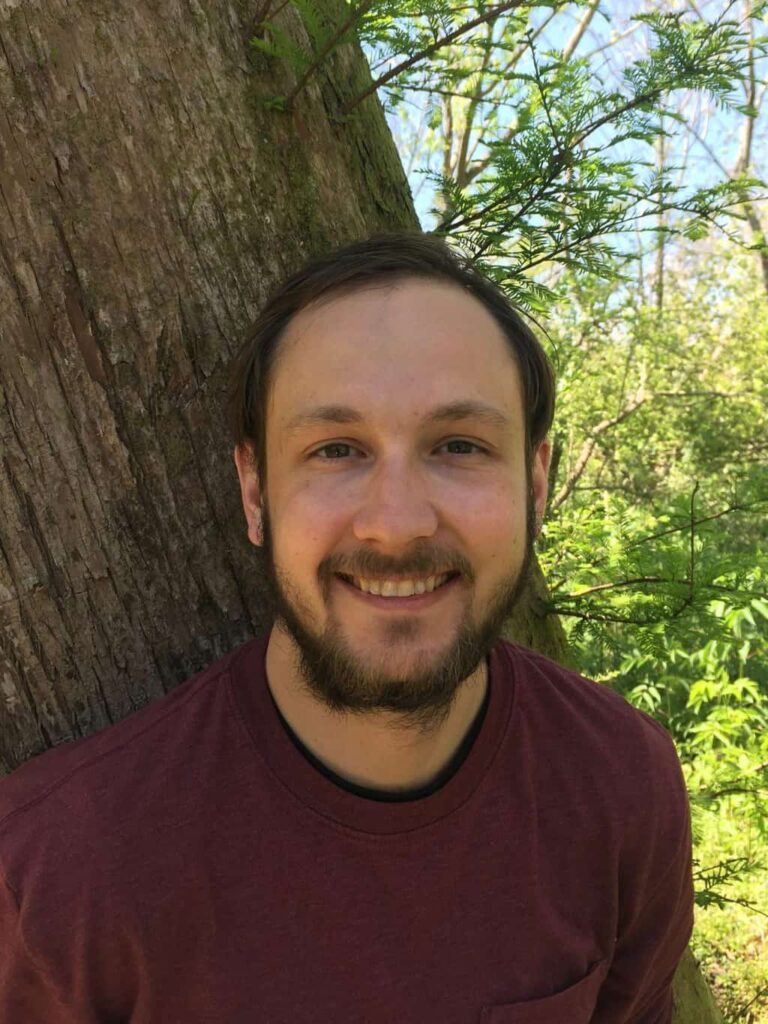
Ryan Franke grew up in Eagan, MN and learned to revere the natural world at a young age. During a fall camping trip around Lake Superior in 2015, he became fascinated with fungi and shortly thereafter joined the Minnesota Mycological Society. His fascination with fungi mushroomed after joining the society, opening a gourmet mushroom cultivation business in 2017, editing the MMS newsletter from 2018-2020, and most recently joining the mycology focused Forest Pathology Lab at the UMN in 2023
Learn more about Ryan’s work: https://mitppc.umn.edu/research/research-projects/biological-control-black-locust-using-fungi
Mikayla Haynes
Mycorrhizal Fungi Recruitment to Seedlings: Tree-to-tree vs wind dispersal?
In the world of ecological restoration, it is increasingly apparent that mycorrhizal fungi plays an imperative role in both restoring habitats to functioning ecological niches as well as ensuring resilience in the face of climate change. While there is a surge in commercial mycorrhizal fungi use, there are no regulations and few standards to guide the industry in a responsible, sustainable way, which may create unintended consequences down the road. By focusing her research on tree responses to native mycorrhizal fungi, Haynes has begun to test whether using native mycorrhizal fungi in nursery-settings is a viable path forward for reforestation efforts in northern Minnesota. In her current experiment, Haynes explores whether there is benefit to planting inoculated eastern white pines (Pinus strobus) near uninoculated eastern white pines (tree to tree dispersal) or if nearby sources of mycorrhizal fungi find their way to tree roots regardless of whether there is an inoculated tree nearby (alternative dispersal).
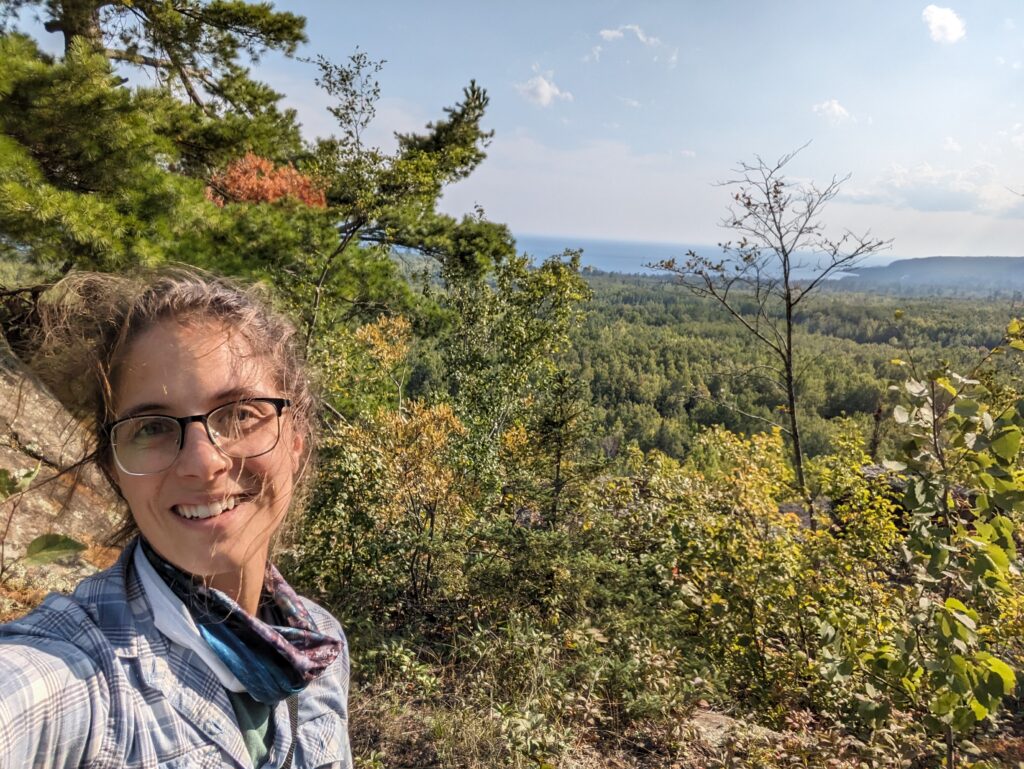
Mikayla Haynes, a third-year PhD student in Dr. Julie Etterson’s lab at the University of Minnesota, has spent her time in the Integrated Biosciences Program researching ways that mycorrhizal fungi can benefit reforestation efforts. As a life-long Duluthian and fungi enthusiast, she has enjoyed getting to know her fungal neighbors (both edible and just plain cool), observing responses of known fungal species to different precipitation patterns throughout the years. In learning about the importance of mycorrhizal fungi, she has dedicated her current path to identifying habitat restoration opportunities in northern Minnesota where she can implement mycorrhizal fungi application to improve and restore landscapes to functioning habitat for sensitive plant and animal species.
Learn more about Mikayla’s work: https://sites.google.com/d.umn.edu/dr-julie-r-etterson/lab/current-grad-students?authuser=0#h.durl4gner1fu
FOR MORE INFORMATION
How to join a Zoom meeting: You do not need a Zoom account, but you will need the Zoom app installed on your desktop or mobile device. You can either download the Zoom app in advance here. Or, you will be automatically prompted to download and install the Zoom app when you click on a meeting link for the first time. You can also join a test meeting at any time at https://zoom.us/test. Watch a video on how to join a Zoom meeting here.