Minnesota Regional Poison Center 800-222-1222
The webPOISONCONTROL online triage tool and app are available free of charge and accessible 24/7. They guide you through a series of questions that can help you decide what to do when you suspect poisoning.
Based on the information you provide, you will be given a case-specific recommendation that lets you know if it’s safe to stay home or if further guidance from the Minnesota Regional Poison Center is needed by calling 800-222-1222.
Has Your Pet Eaten a Poisonous Mushroom?
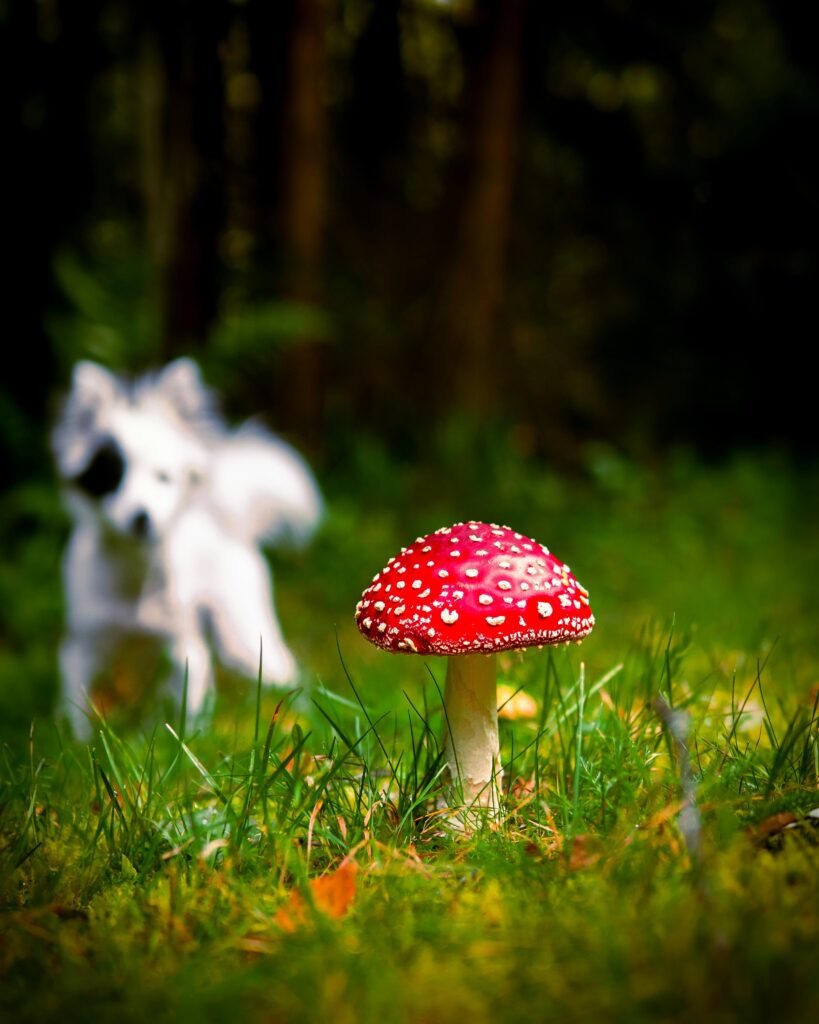
Pets sometimes eat mushrooms in yards and while on walks. While 99% of mushrooms have little or no toxicity, the 1% that are highly toxic can cause life-threatening problems in pets. Take extra care to keep pets away from areas where mushrooms might be growing.
The ASPCA Animal Poison Control Center (APCC) is your best resource for any animal poison-related emergency, 24 hours a day, 365 days a year. If you think your pet may have ingested a potentially poisonous substance, call 888-426-4435. A consultation fee may apply.
NAMA’s Information on Mushroom Poisoning
The most visited page on the NAMA website features an informative “poisonings” section, providing detailed information about the symptoms of various ingested toxins.
If you know anyone who has had an unfortunate experience eating wild mushrooms this season, including pets, file an online poison report. For decades, NAMA has compiled these reports and those from its network of emergency mushroom identifiers into an extensive database of mushroom poisonings. Be safe. If in doubt, throw it out!
Poisonous Mushrooms of Minnesota
When you tell someone you forage for mushrooms, the first thing most people ask is how you know what you find isn’t poisonous. Hopefully, you have been trained in mushroom identification and are confident in the mushrooms’ safety for consumption before adding them to your basket. Never eat any mushroom that you have not positively identified as safe to eat.
Here are some of Minnesota’s poisonous mushrooms.
Amanitas
Minnesota is home to many Amanita species, ranging from safe to deadly. The two most deadly Amanitas are Amanita bisporigera (Destroying Angel) and Amanita phalloides (Death Cap).
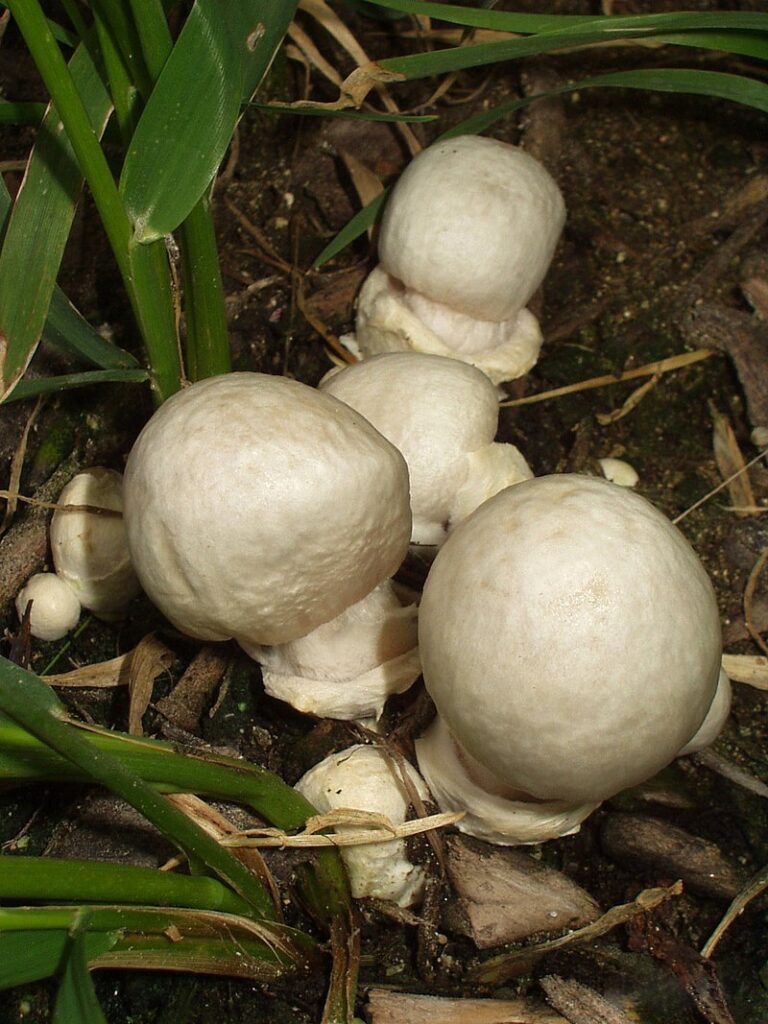
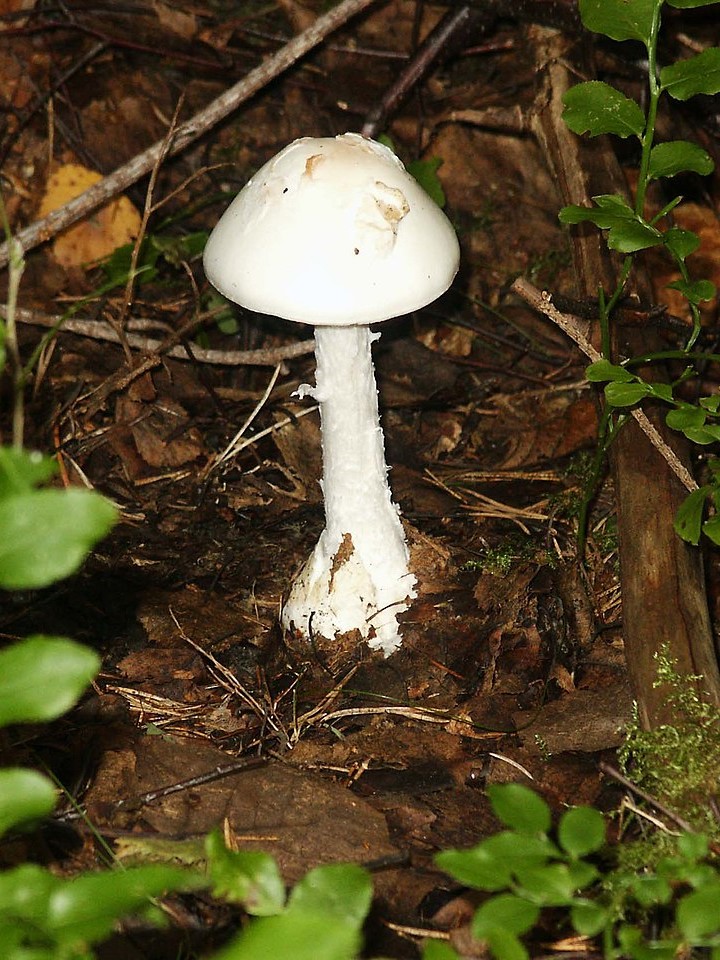
Amanita bisporigera
Destroying Angel can be mistaken for a puffball when it is young.
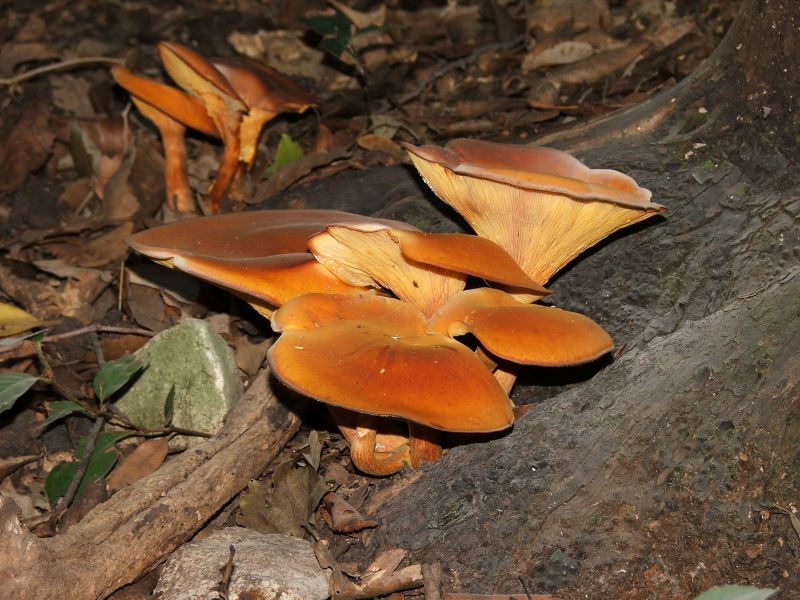
Omphalotus olearius (Jack-o-Lantern)
The jack-o’-lantern mushroom is a poisonous, orange-gilled mushroom that is often mistaken for chanterelles. It is found growing on decaying stumps, buried roots, or at the base of hardwood trees. It grows in a cluster rather than as individual fruiting bodies, unlike chanterelles. They also have true, non-forking gills rather than the ridges that chanterelles have. And if you slice them down the middle, Jack-o-Lamterns are orange all the way through, while chanterelles are nearly white on the inside.
The Jack-o-Lantern mushroom contains the toxin illudin S, and is poisonous to humans. While not lethal, consuming this mushroom leads to very severe cramps, vomiting, and diarrhea.
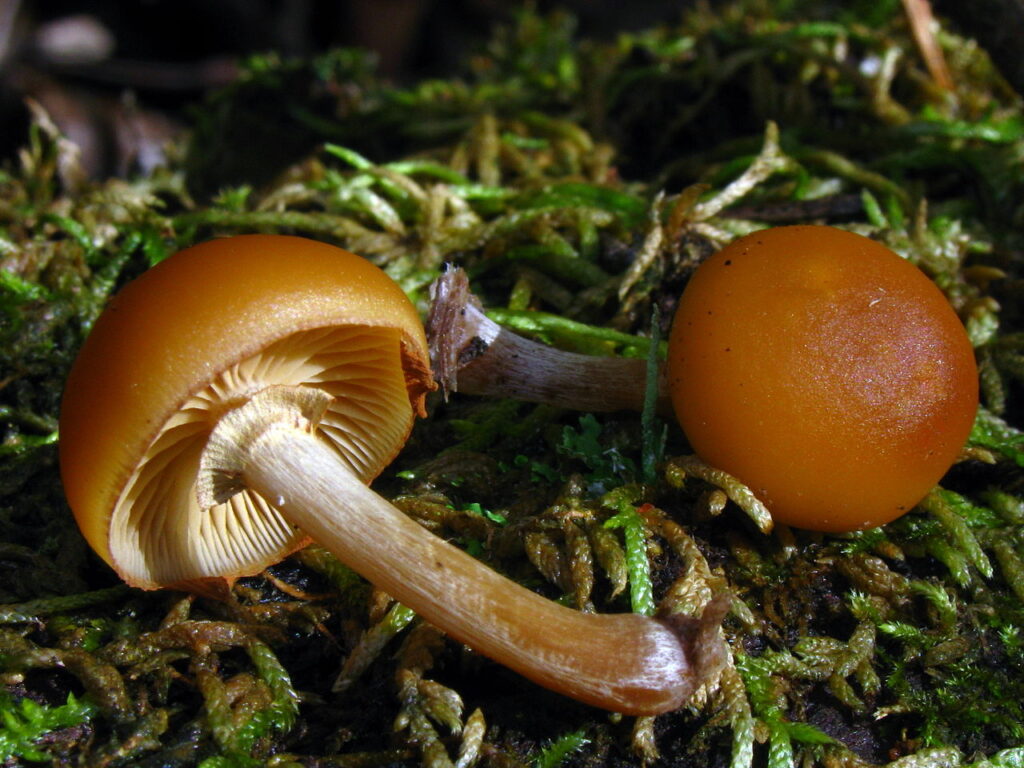
Galerina Marginata (Deadly Galerina)
While not an Amanita, the Deadly Galerina contains amatoxin in quantities that can kill adult humans.
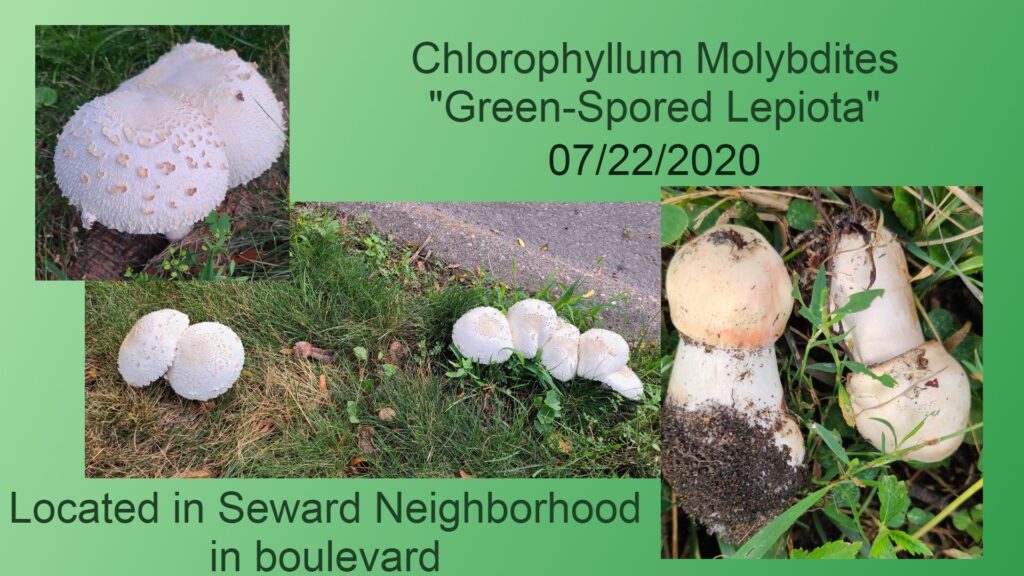
Chlorophyllum molybdites (False Parasol)
False parasol is the most toxic of the shaggy parasol group. It’s not usually deadly, but it is highly unpleasant. Because this species looks like a shaggy parasol, it makes a lot of people sick through mistaken identity.
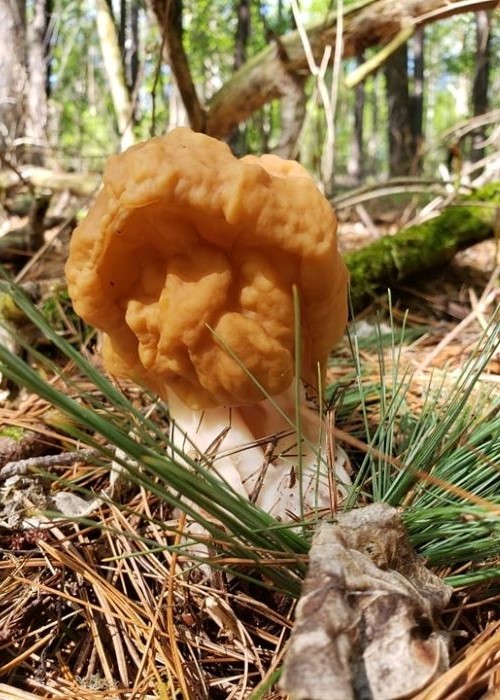
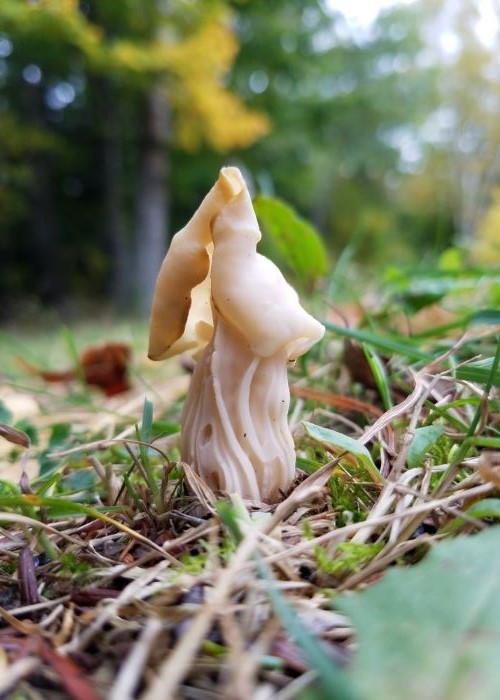
False Morels
The false morels are a group of mushrooms with wrinkled caps that look vaguely like the pitted caps of the morels. Some mycologists include only the Gyromitras (image on the left) in the group, but others also include some Verpas and some Helvellas (photo on the right), as well. All three can be found in Minnesota. The best-known species in Minnesota is Gyromitra esculenta.
Most people who eat them don’t do so because of mistaken identity. They eat false morels on purpose. The problem with false morels is that their toxins can accumulate in the body, causing no symptoms for years until the consumer is suddenly poisoned. This makes it difficult to judge the mushroom’s safety.
Knowledge Keeps You Safe
Learn how to forage safely with the MMS. Members can join our forays where educators teach you in the field. They can also participate in our monthly meetings where special guest speakers give in-depth presentations on fungi!