
As part of the Minnesota Mycological Society’s mission to advance the study and appreciation of fungi, this project offers members and community scientists the opportunity to help locate Minnesota’s rare and special-interest species. Many of these fungi are elusive, poorly documented, or highly sensitive to environmental change—making each discovery an important piece of Minnesota’s ecological story.
By seeking out and reporting rare fungi, you can play a direct role in expanding our state’s understanding of fungal diversity. Your observations will contribute to real-world conservation decisions, guide habitat protection, and support research partnerships with institutions like the Bell Museum.
Every photo, spore print, and location note adds to a growing body of knowledge that will help protect these species for generations to come. Use the sections below to learn how to recognize, document, and report your finds—and join us in the search to ensure Minnesota’s rare fungi are seen, studied, and preserved.
Rare Fungi
Note: Click on the image thumbnails below to view the images in a lightbox gallery.
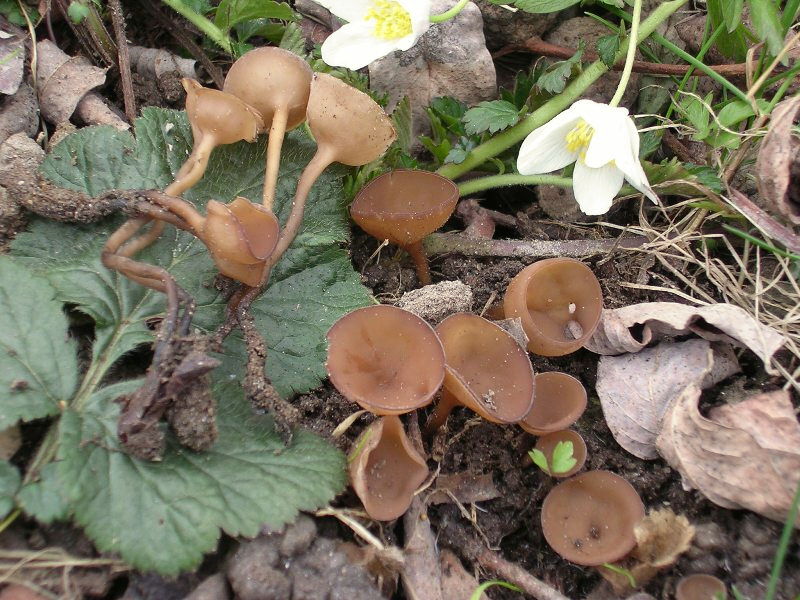
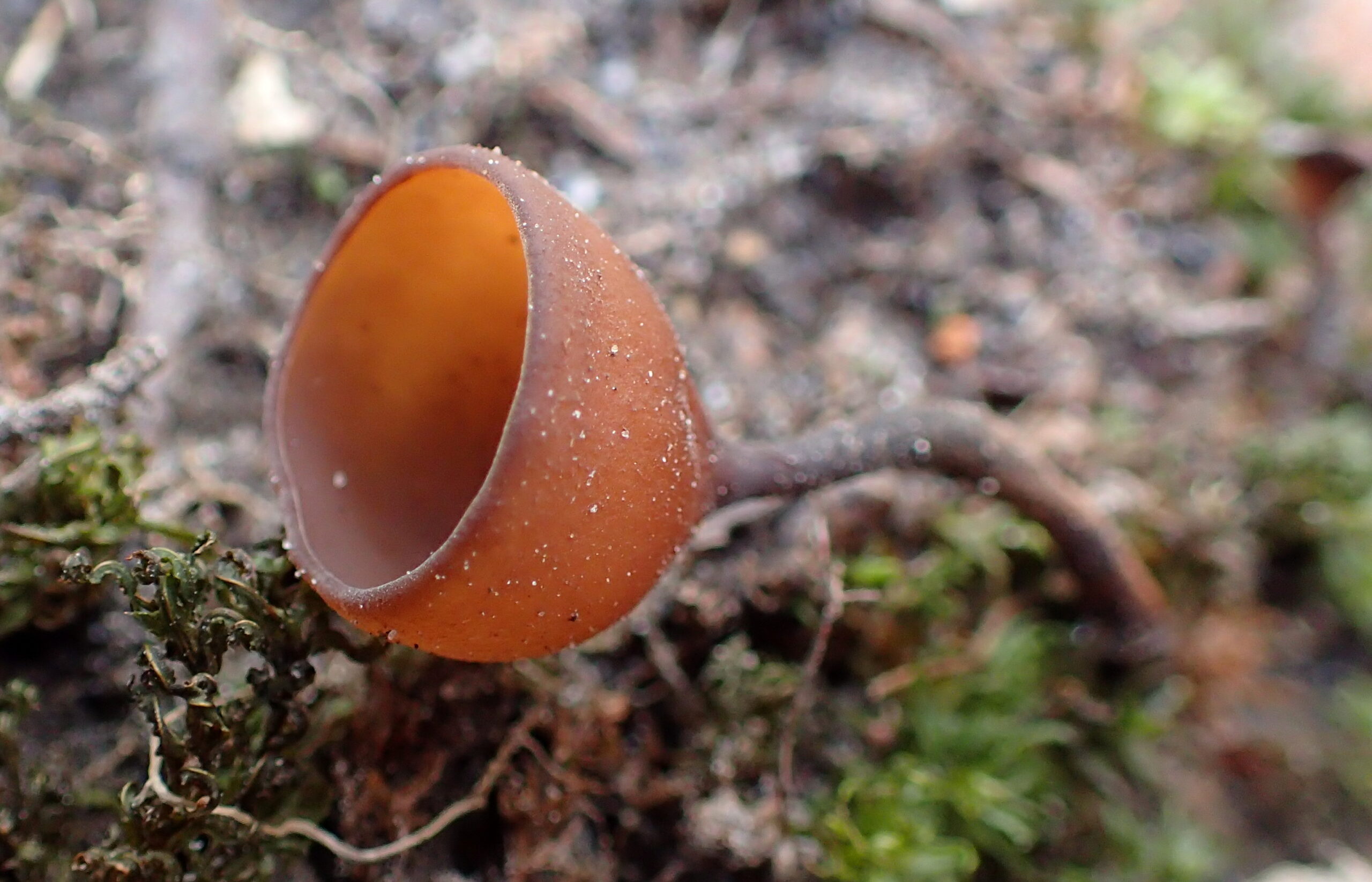
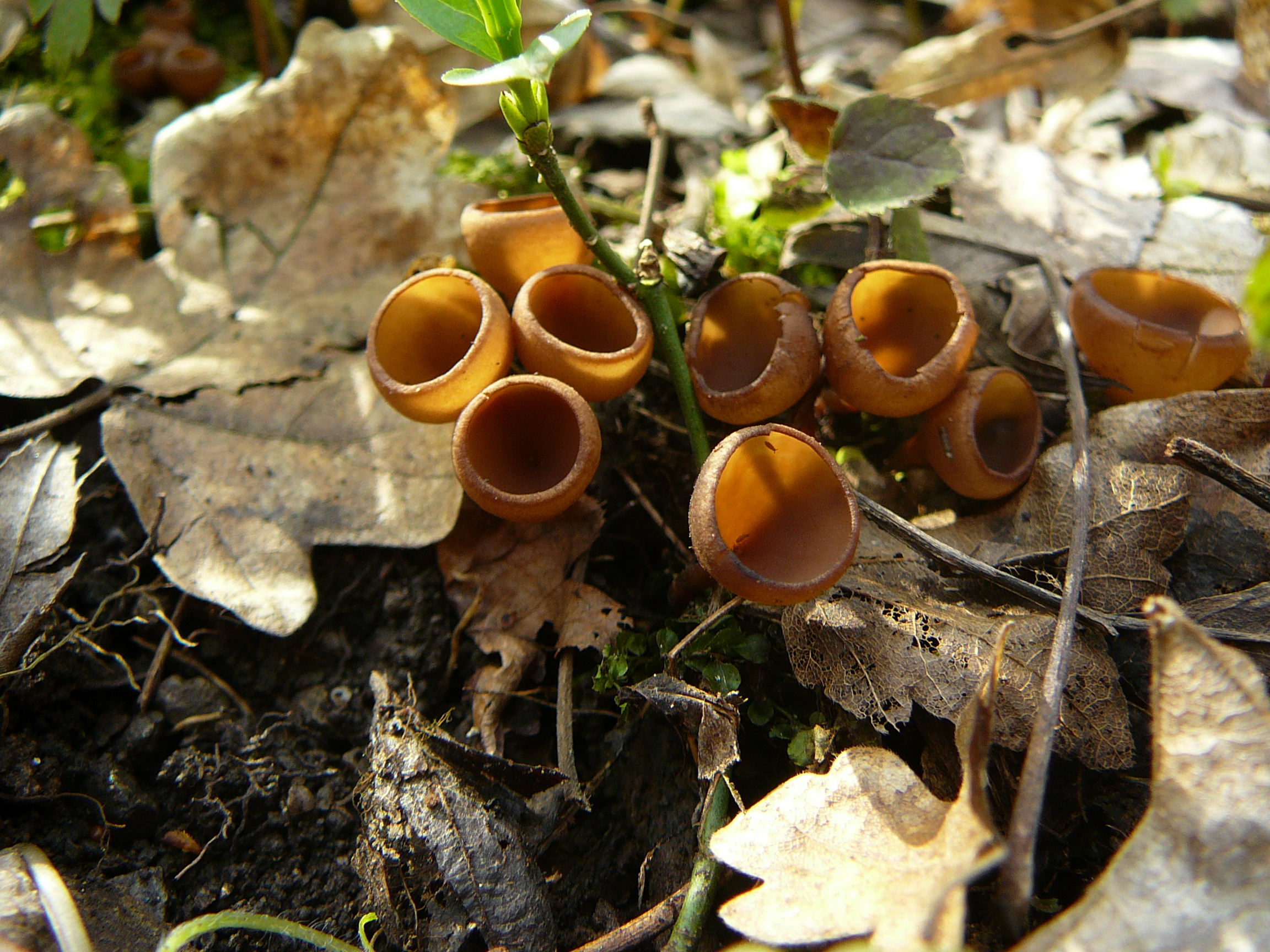
Anemone Cup (Dumontinia tuberosa)
Description: Cup-shaped mushroom with a smooth upper surface that flattens with age. Key characteristic: a wrinkled, long stem that roots into the ground and attaches to a hard, black sclerotium.
When & Where: Often near wood anemone. Earlier in the season, look in moist deciduous woods—sometimes near streams or floodplains.
What else could it be: Other brown cups (e.g., Peziza phylogena). Dig to expose the rooting stem and sclerotium; without those, it’s likely another brown cup.
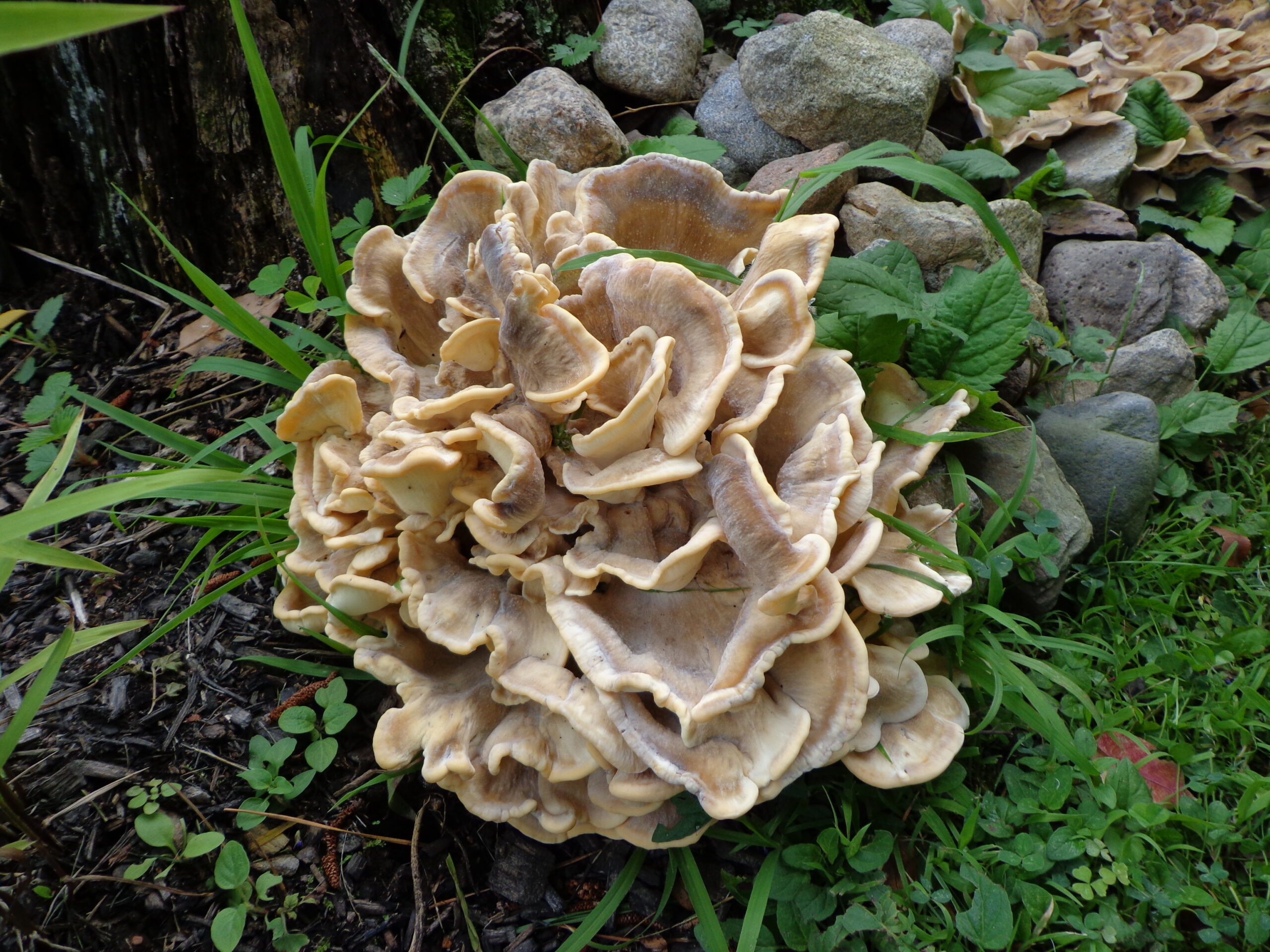
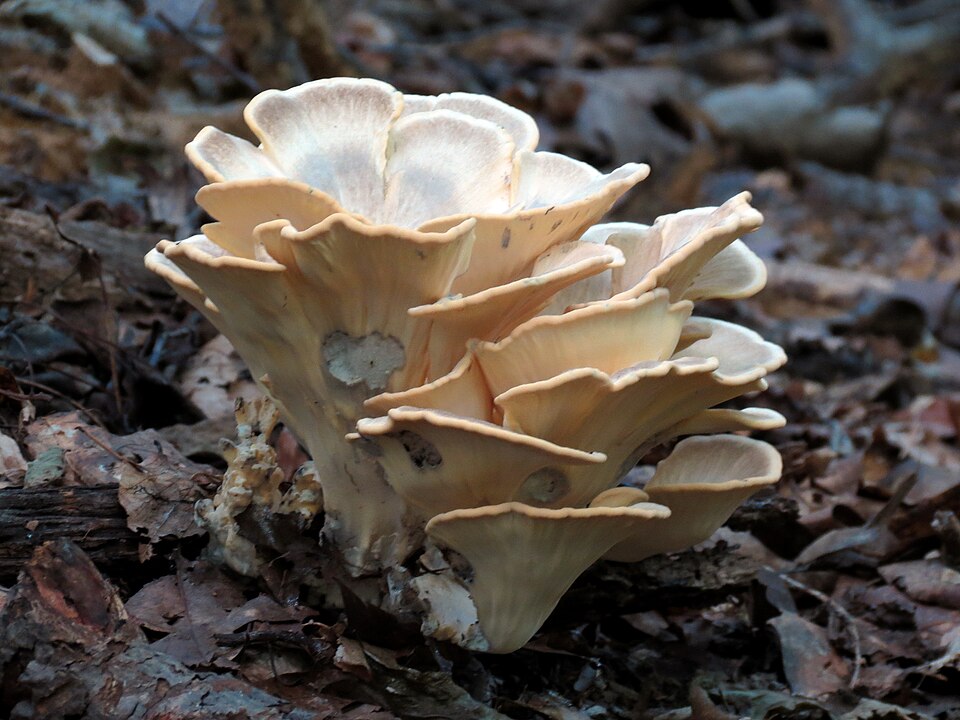
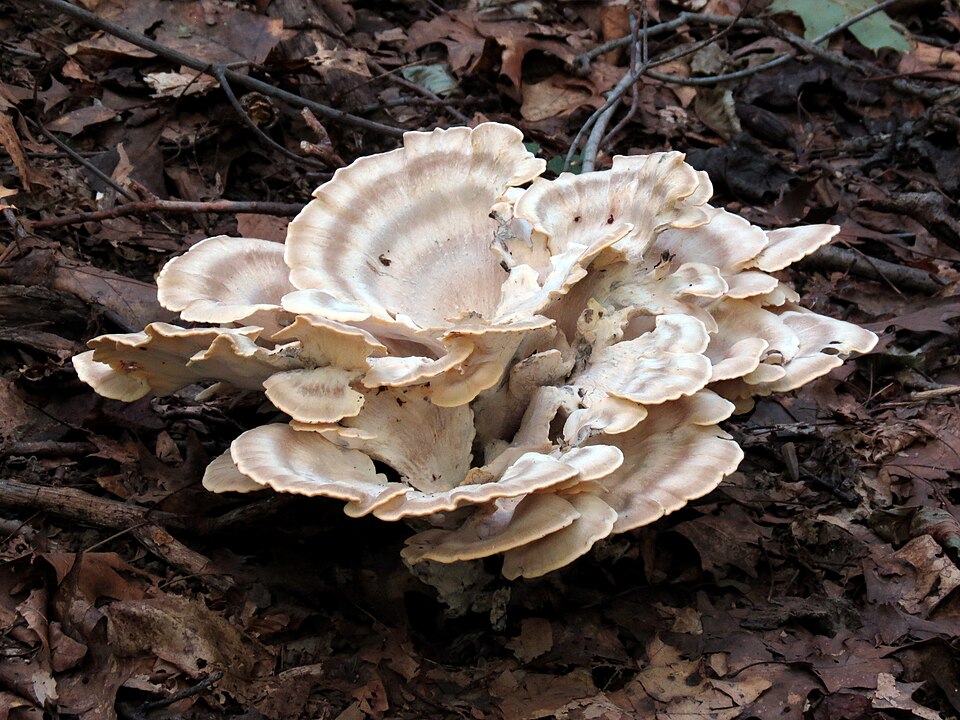
Black Staining Polypore (Meripilus sumstinei)
Description: Large clusters at the base of trees with multiple broad caps that have zoned color and radial streaks. Caps start white and become browner with maturity. Tissue bruises black when handled.
When & Where: Bases of hardwoods—especially oaks—summer through fall.
What else could it be: Can resemble Hen of the Woods (Grifola frondosa), but Meripilus has larger caps, smaller pores, and characteristic blackening.
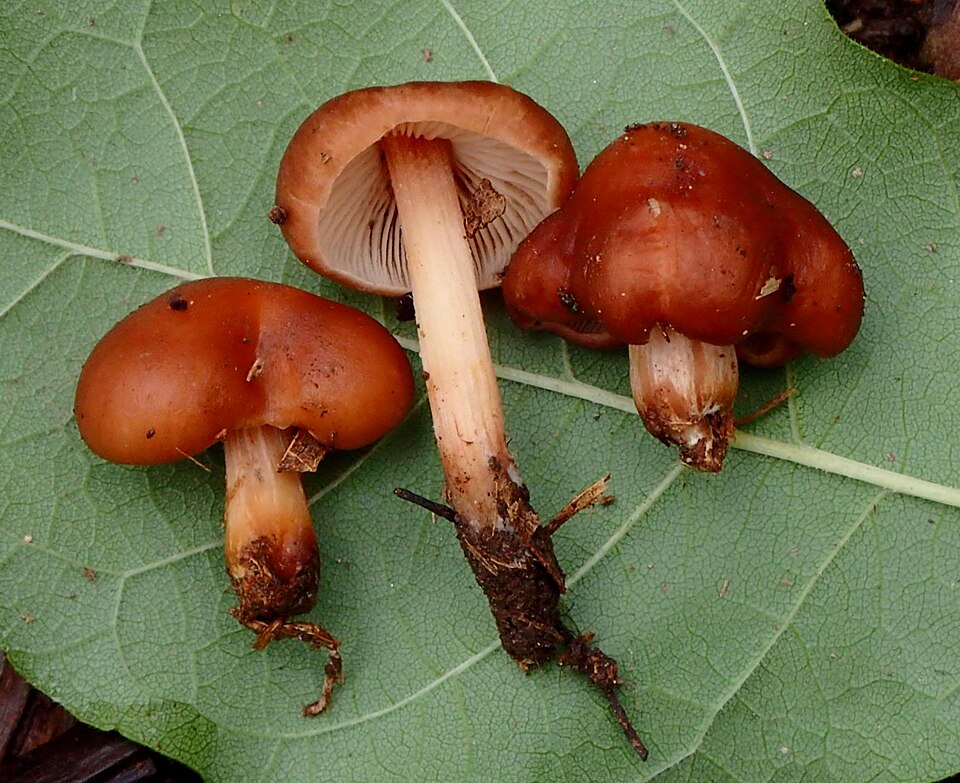
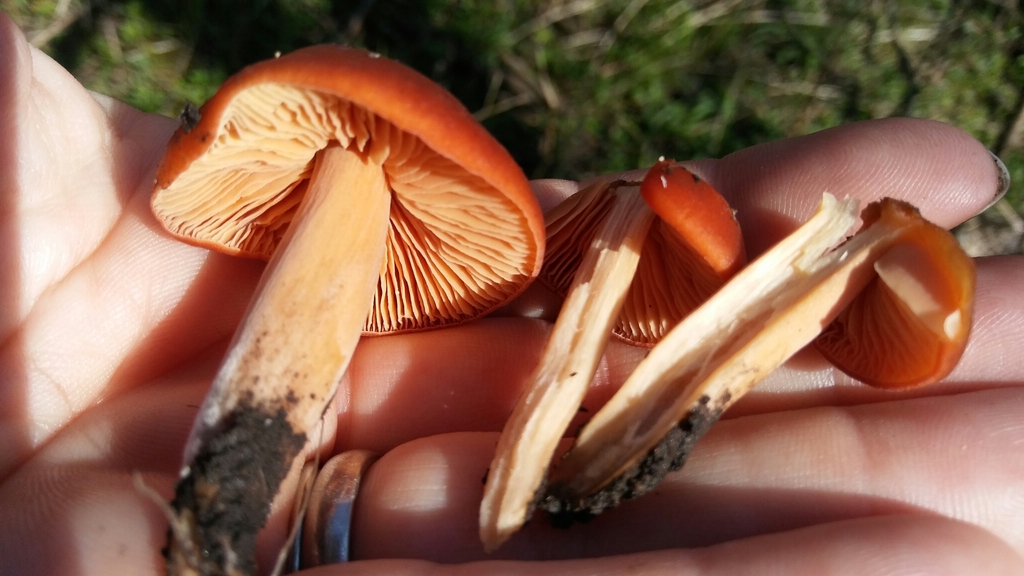
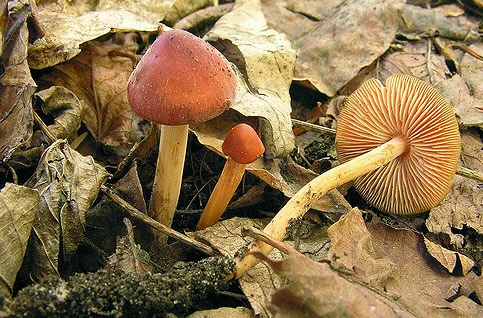
False Witch’s Cap (Caulorhiza hygrophoroides)
Description: Brick-red cap with a solid, twisting stem that roots into the ground. The deep, radicating stem is the key feature—dig rather than pluck.
When & Where: Found in urban/disturbed areas and mature forests, possibly on buried wood. Most observations are in the spring.
What else could it be: Some waxcaps at a glance—but those lack the deep-rooting stem.
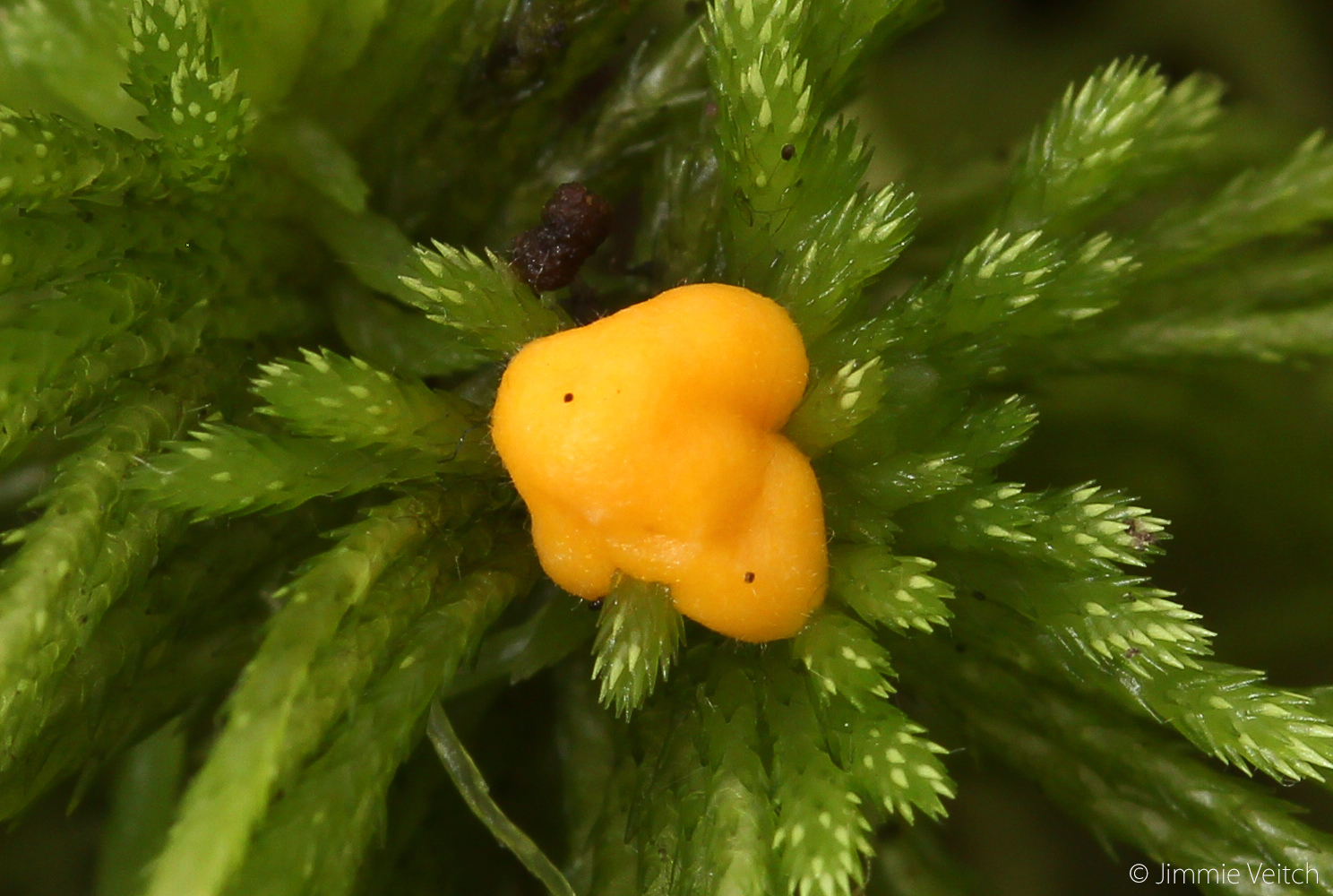
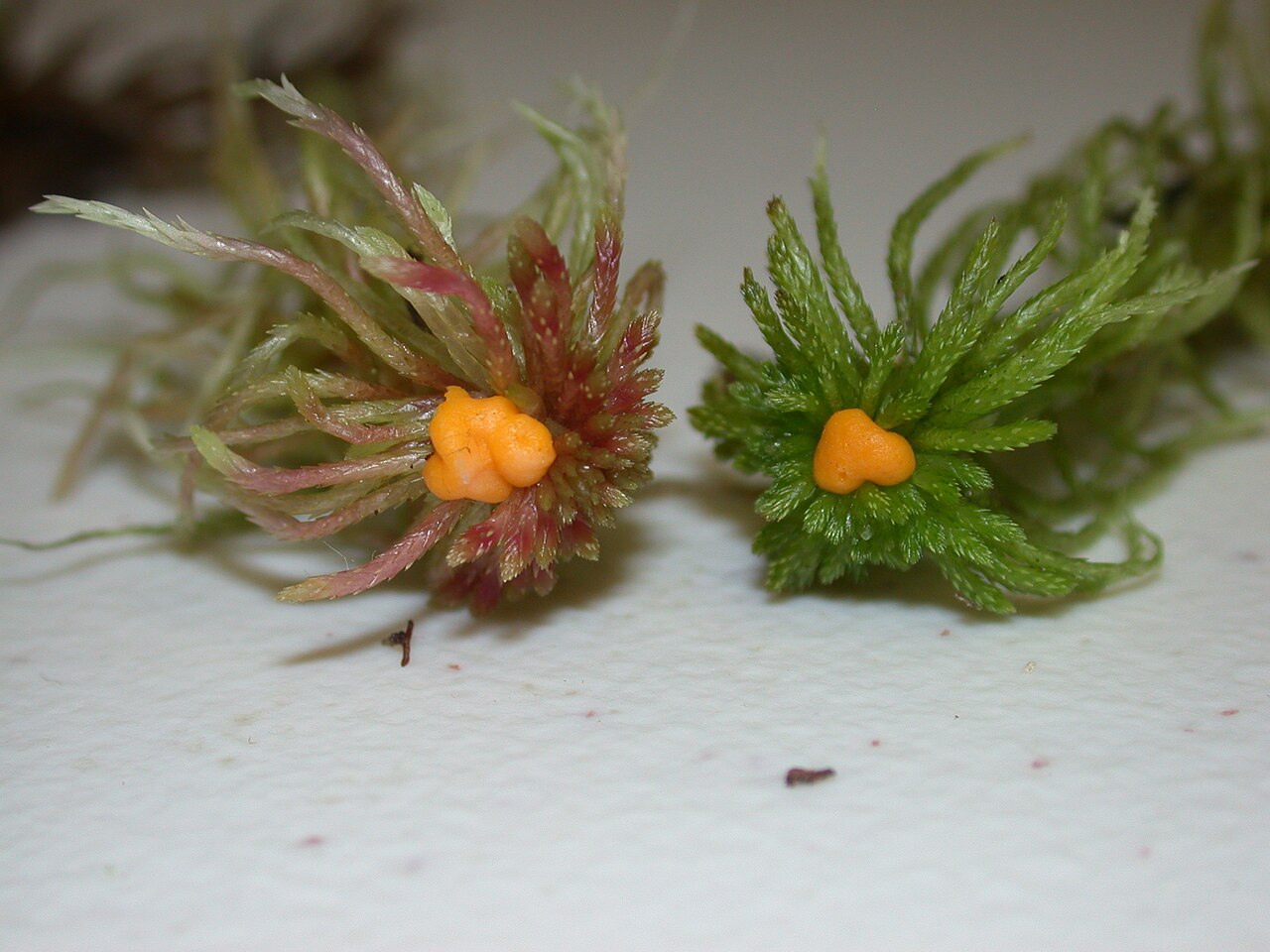
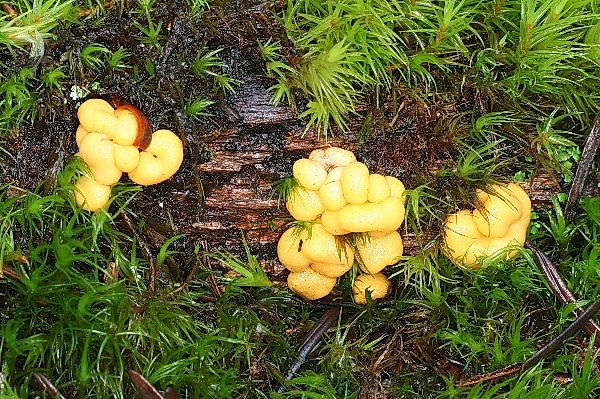
Hairy Pea Truffle (Endogone pisiformis)
Description: Tiny yellow-orange fruitbodies—few millimeters to 2–3 cm—spherical, lobed, or occasionally elongate.
When & Where: Humus-rich soils, leaf mold, or mosses.
What else could it be: Early orange jellies or slime molds—those are more often on wood.
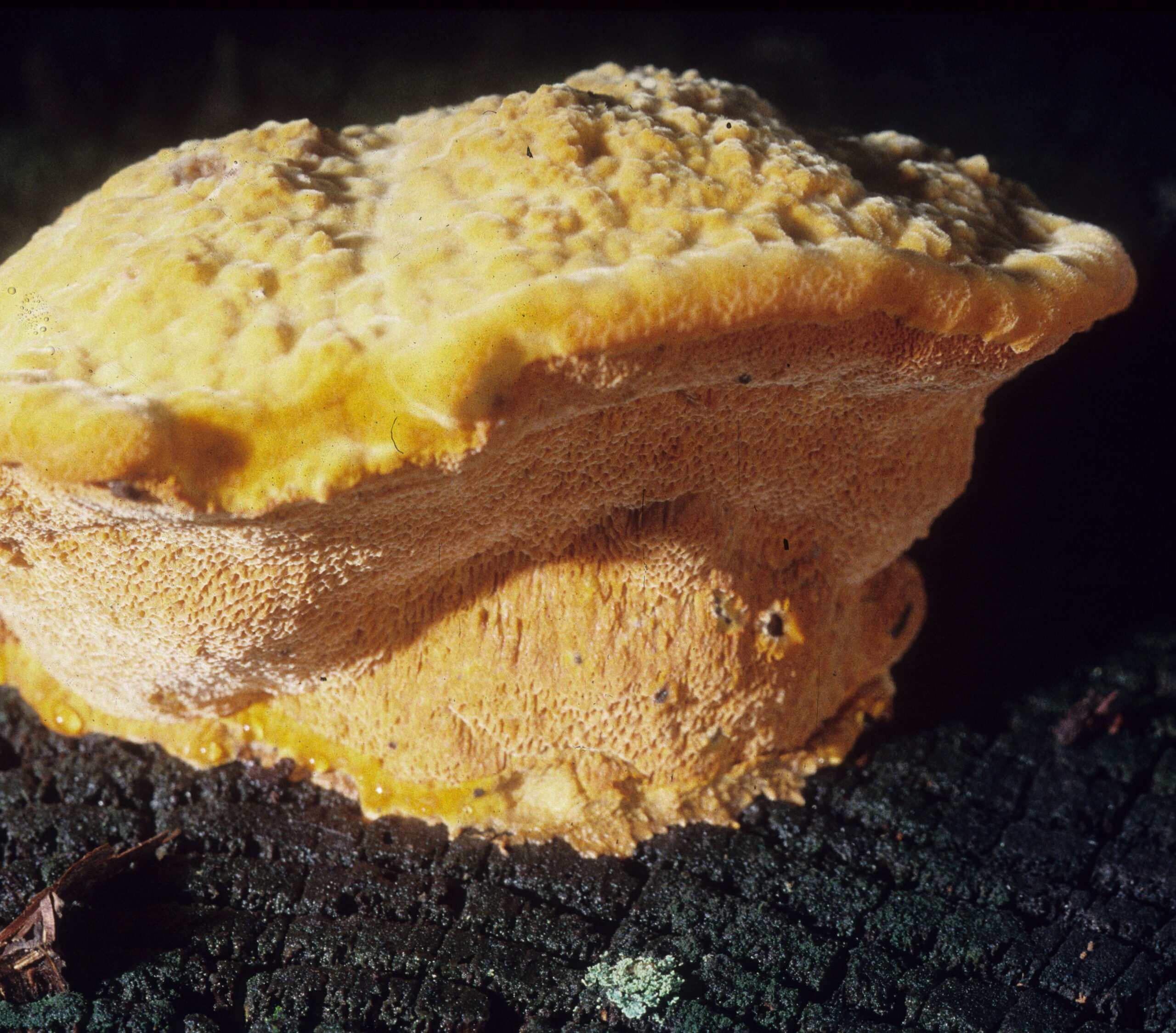
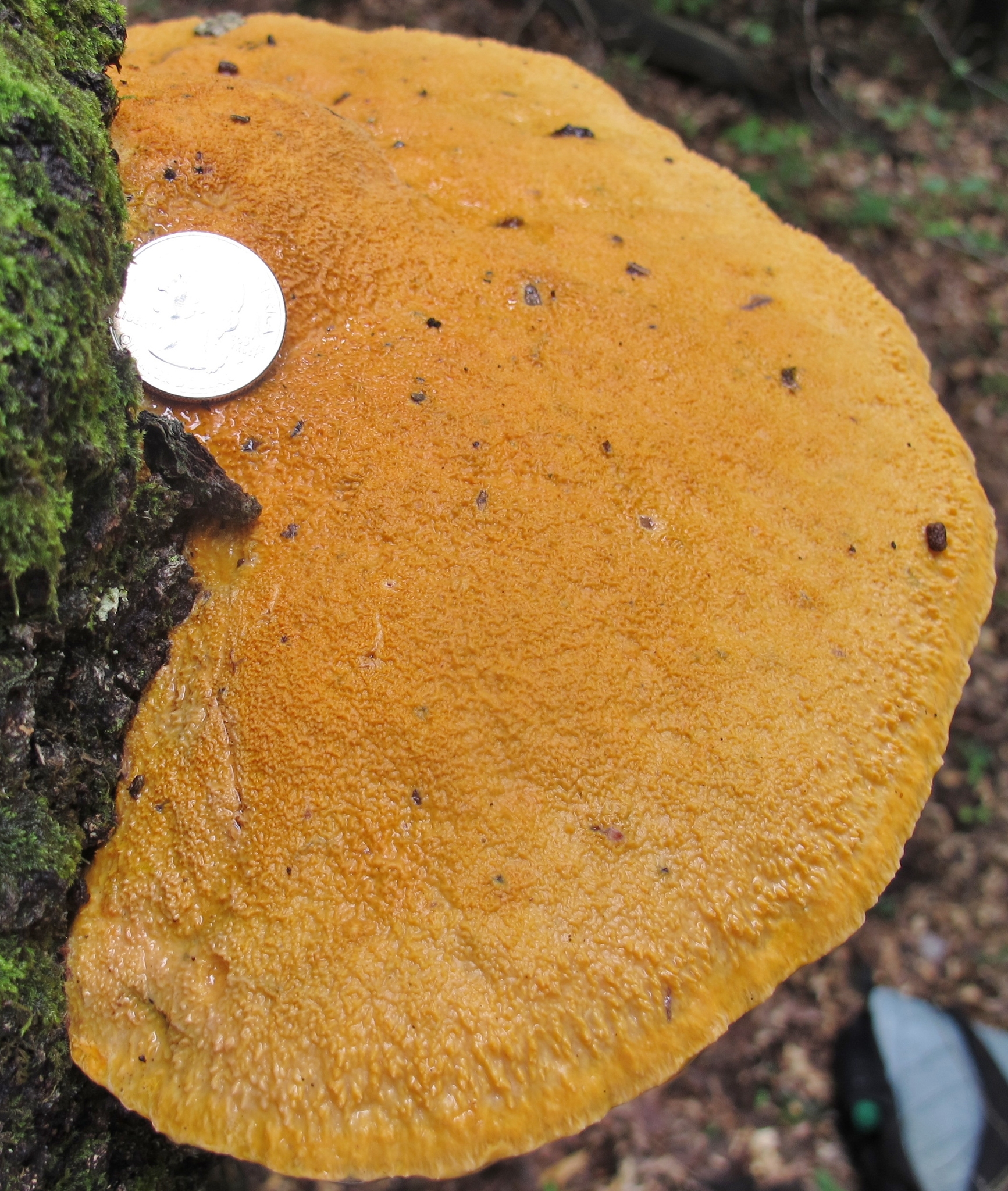
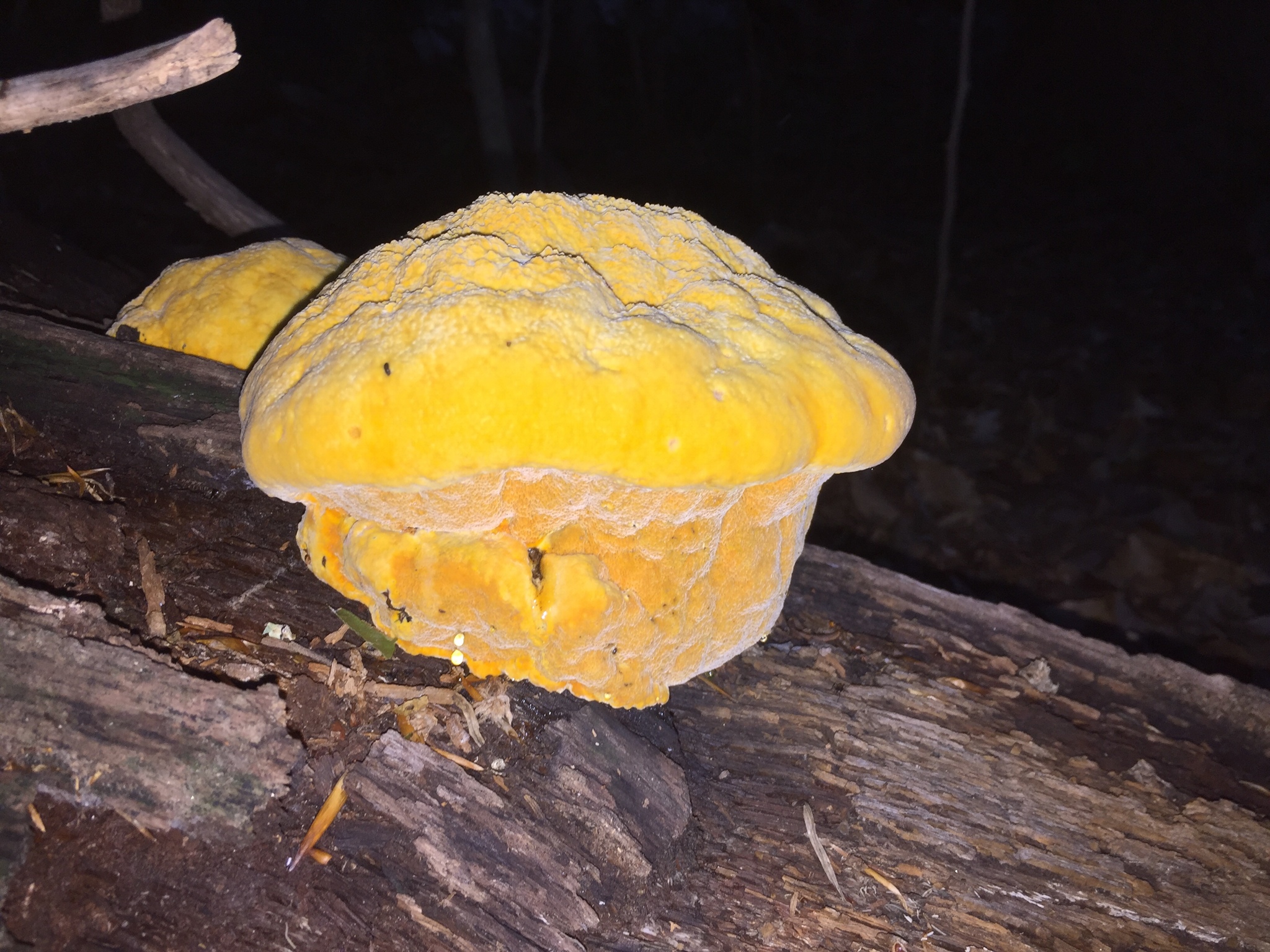
Hapalopilus (Aurantiporus) croceus
Description: Orange, felt-like cap with a fruity aroma; tissue stains red-purple with KOH. Can fruit repeatedly from the same site; considered vulnerable.
When & Where: A white-rot fungus on mature dead or dying oak in the temperate northern hemisphere.
What else could it be: Superficially like Chicken of the Woods; croceus has more even color, a fuzzy cap, non-overlapping shelves, and the distinctive KOH reaction.
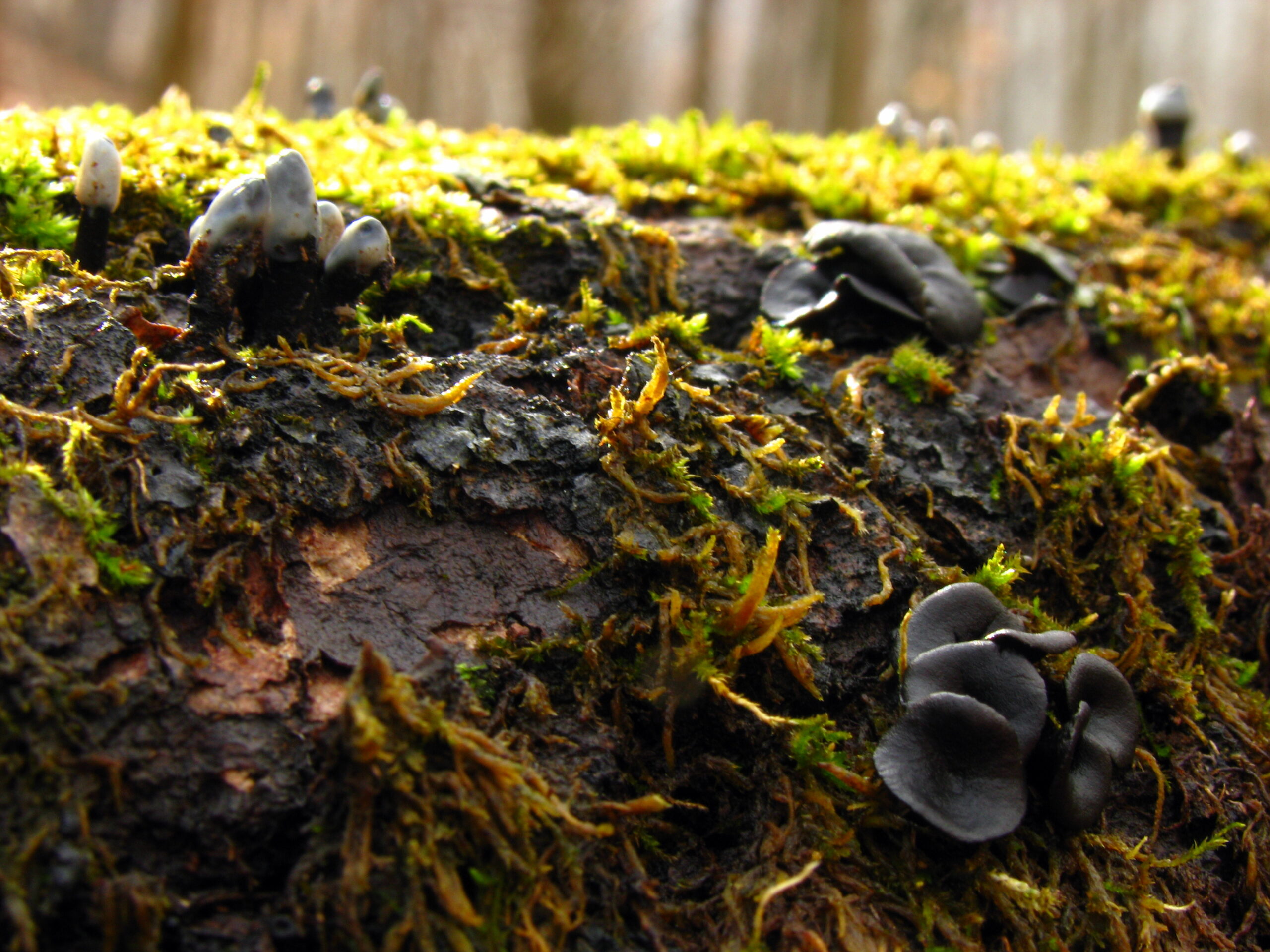
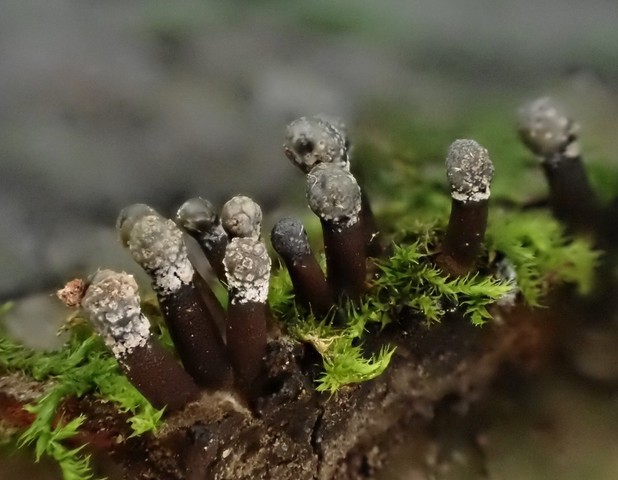
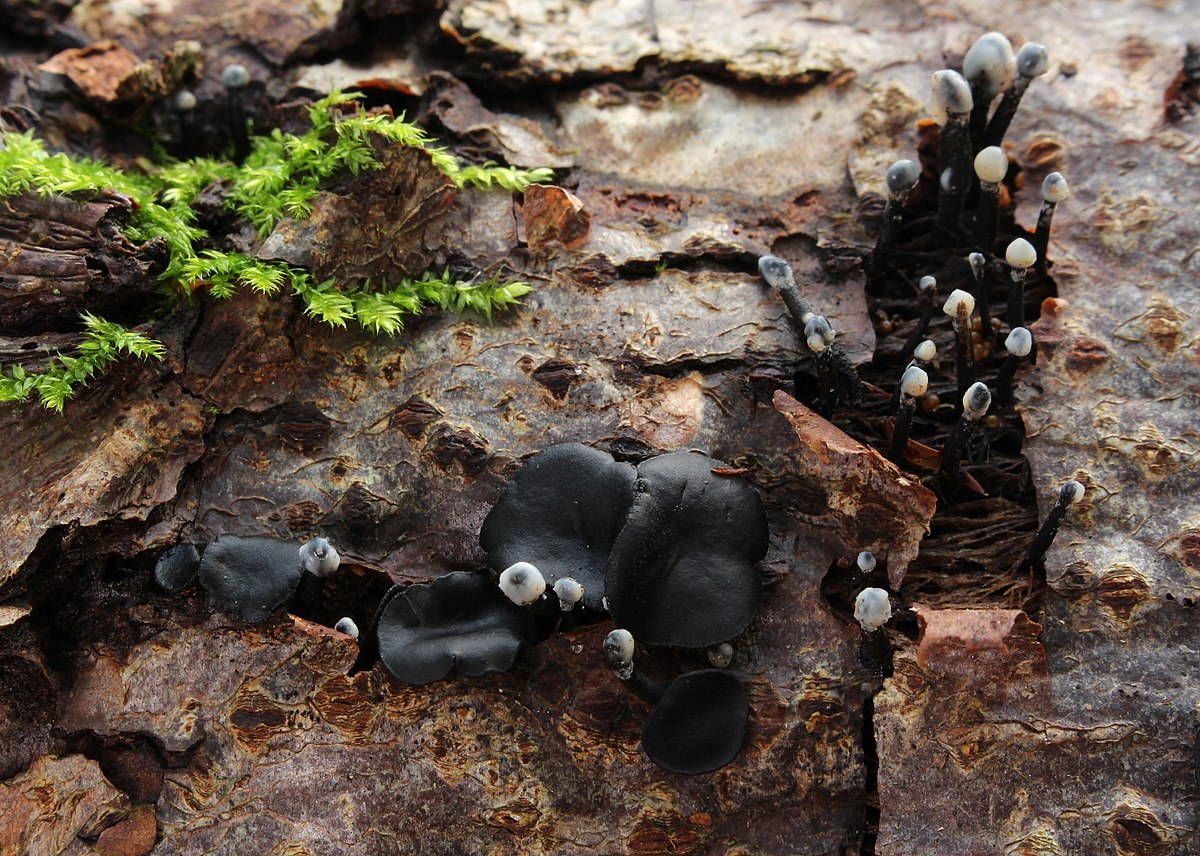
Holwaya mucida
Description: Two distinct stages: asexual anamorph (slender stalk with a whitish, slightly slimy tip) and sexual teleomorph (small black disc on a short stalk).
When & Where: Summer–fall on moss-covered dead logs.
What else could it be: Ebony Cup (Pseudoplectania nigrella); confirmation is strongest when both stages are present.
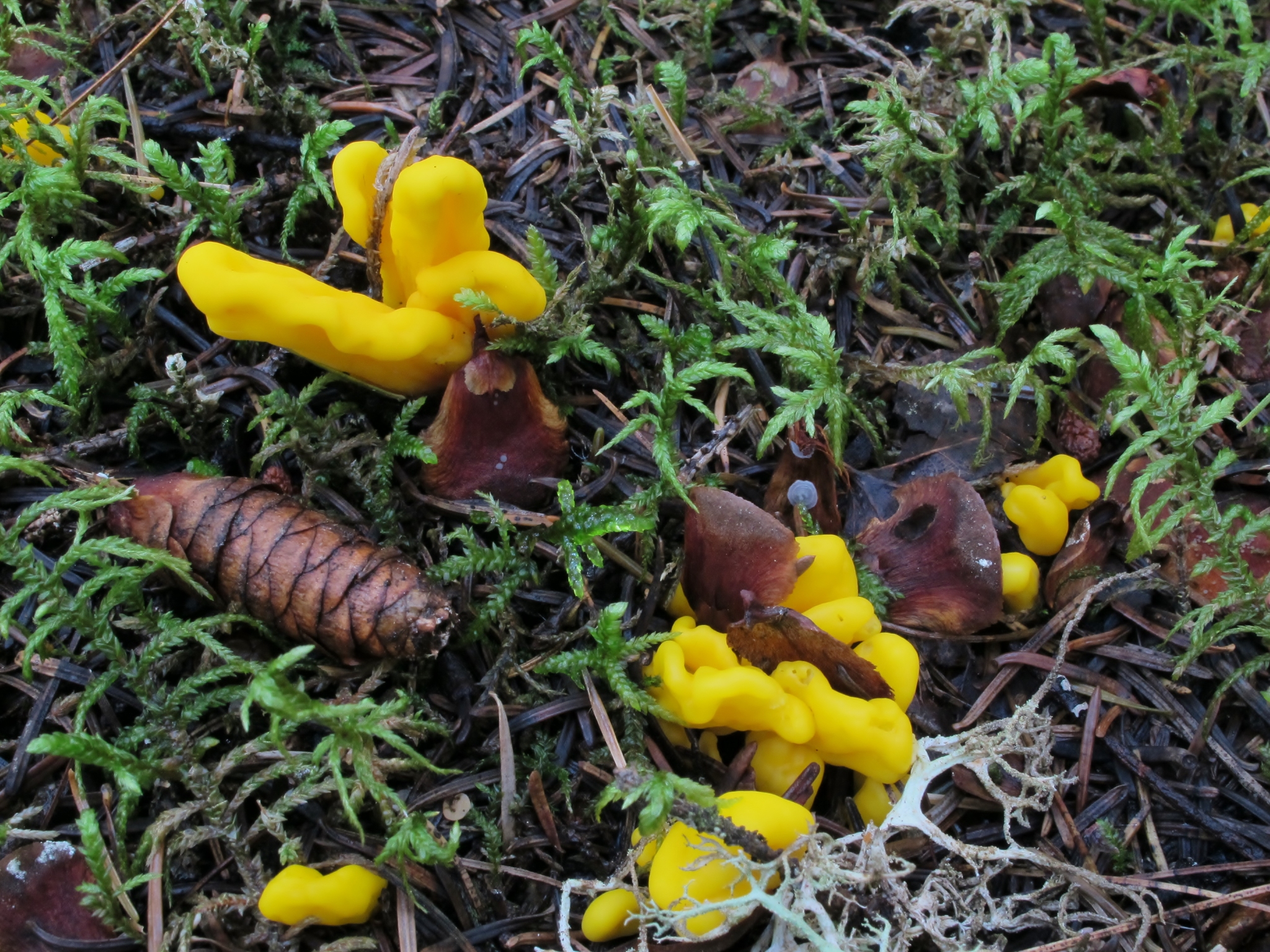
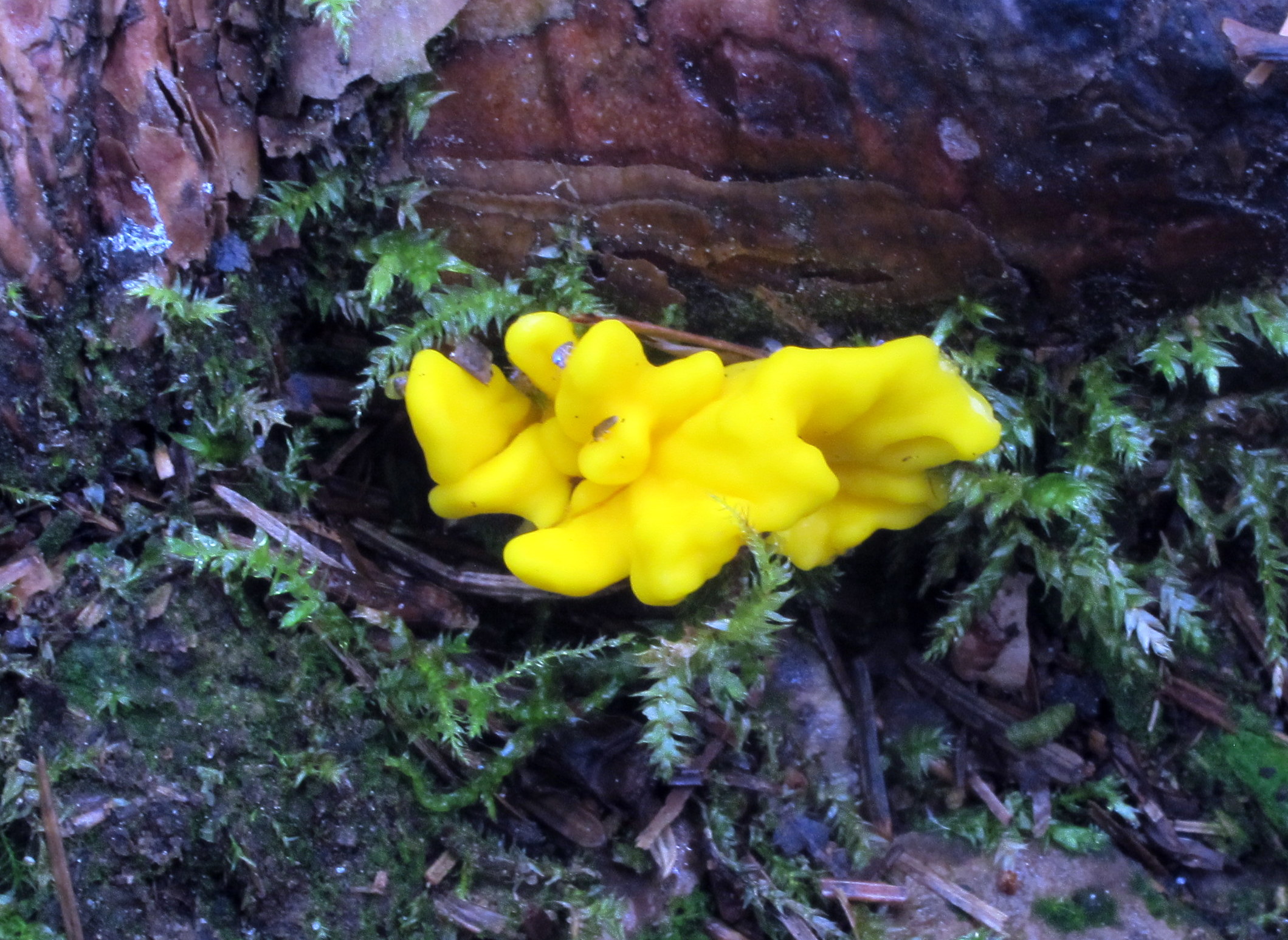
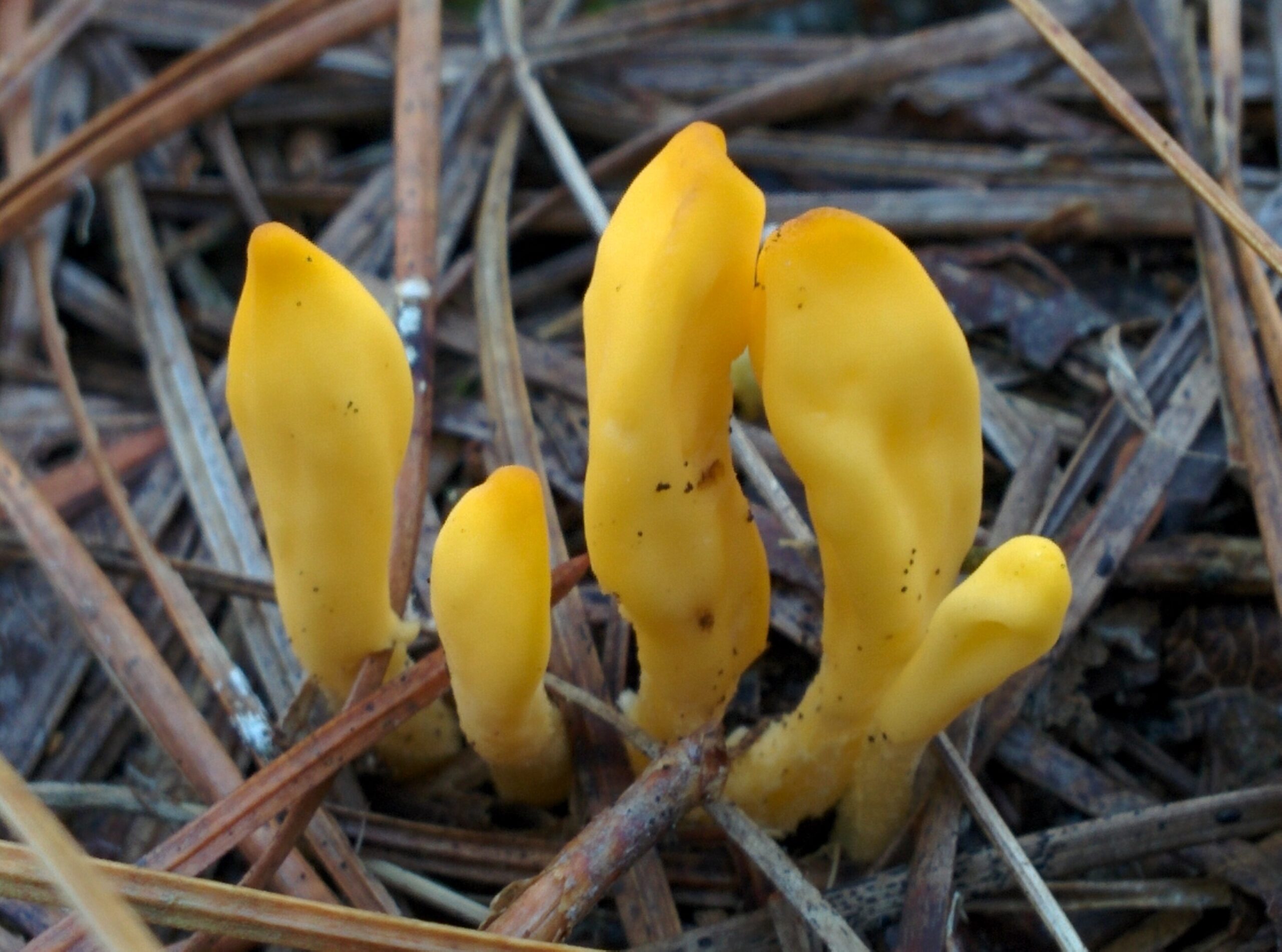
Irregular Earth Tongue (Neolecta irregularis)
Description: As its name suggests, this club-shaped mushroom is characterized by its irregular shape and bright yellow color. It grows 1–5 cm tall and is commonly found scattered or in small groups.
When & Where: Known for growing in leaf litter or moss, this mushroom is most commonly found from June to October in coniferous forests.
What else could it be: Another yellow, club-shaped mushroom could be Clavulinopsis fusiformis (Golden Spindle), but those typically grow in fused clusters, often in grassy areas rather than in forest litter.
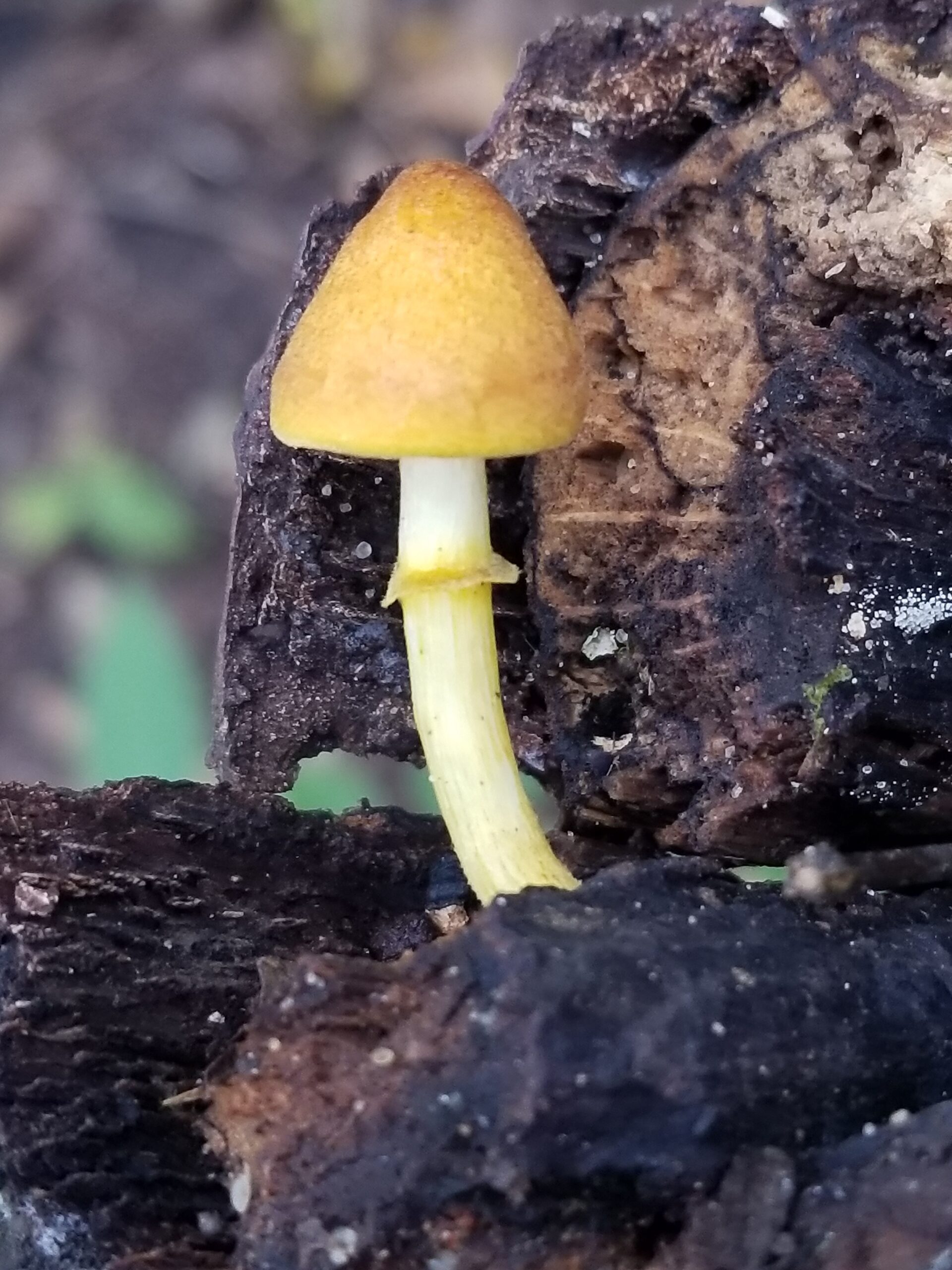
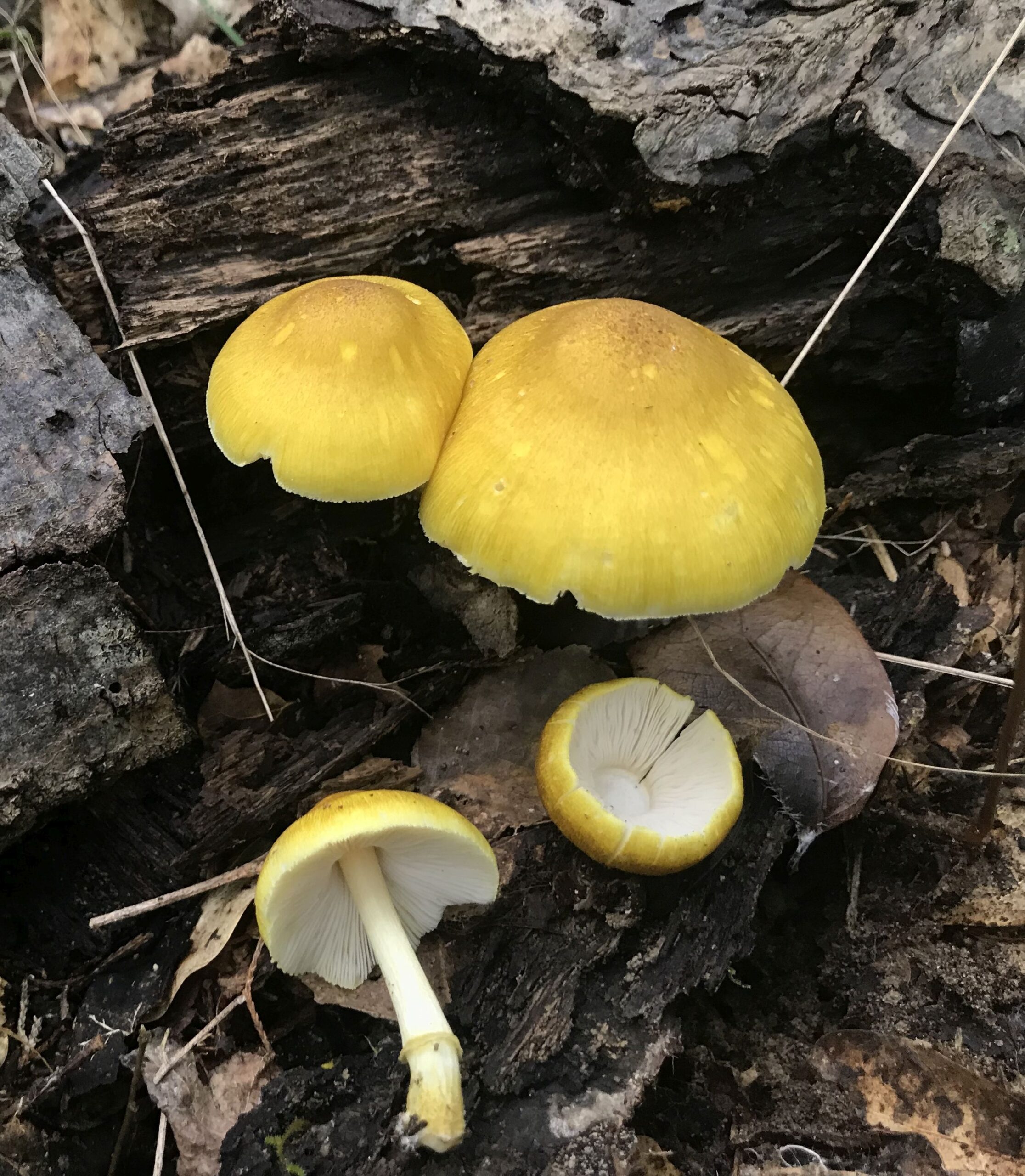
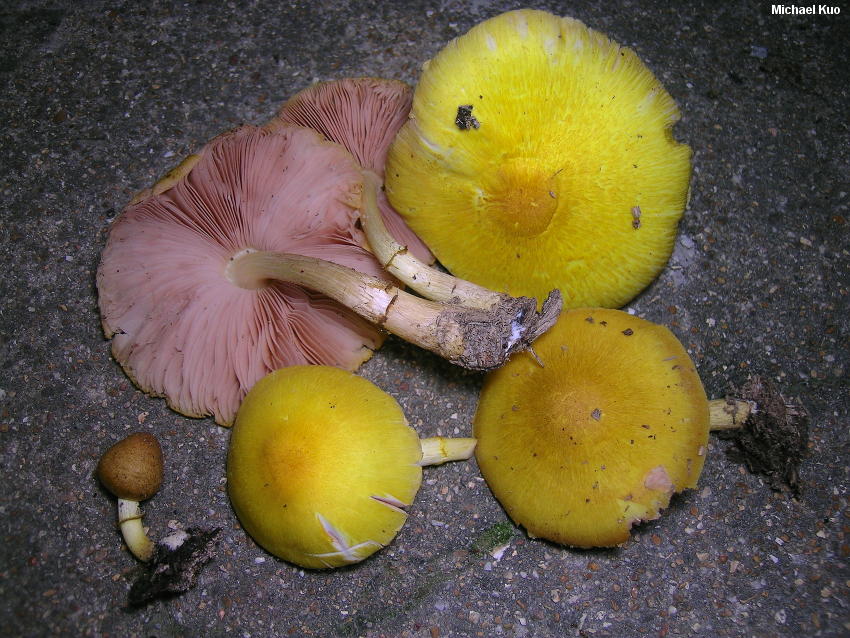
Pluteus mammillatus
Description: Distinctive silky yellow cap. Free gills turn pink with maturity. A delicate ring is often present low on the stipe—this is the only North American Pluteus with a ring.
When & Where: Decaying hardwoods in bottomland hardwood forests (swampy areas); summer–fall.
What else could it be: Ensure there is no volva. Other Pluteus species lack a ring.
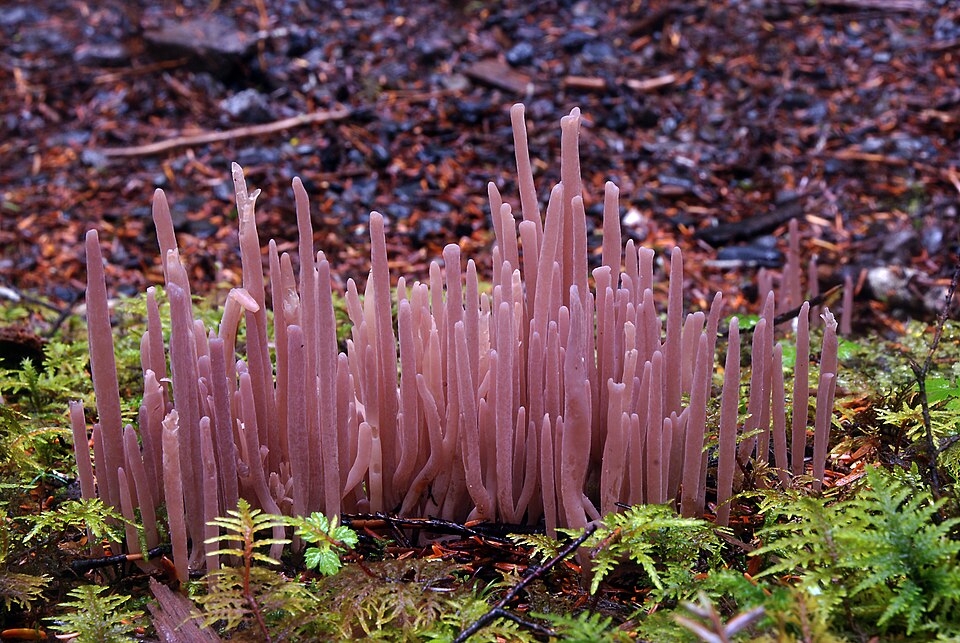
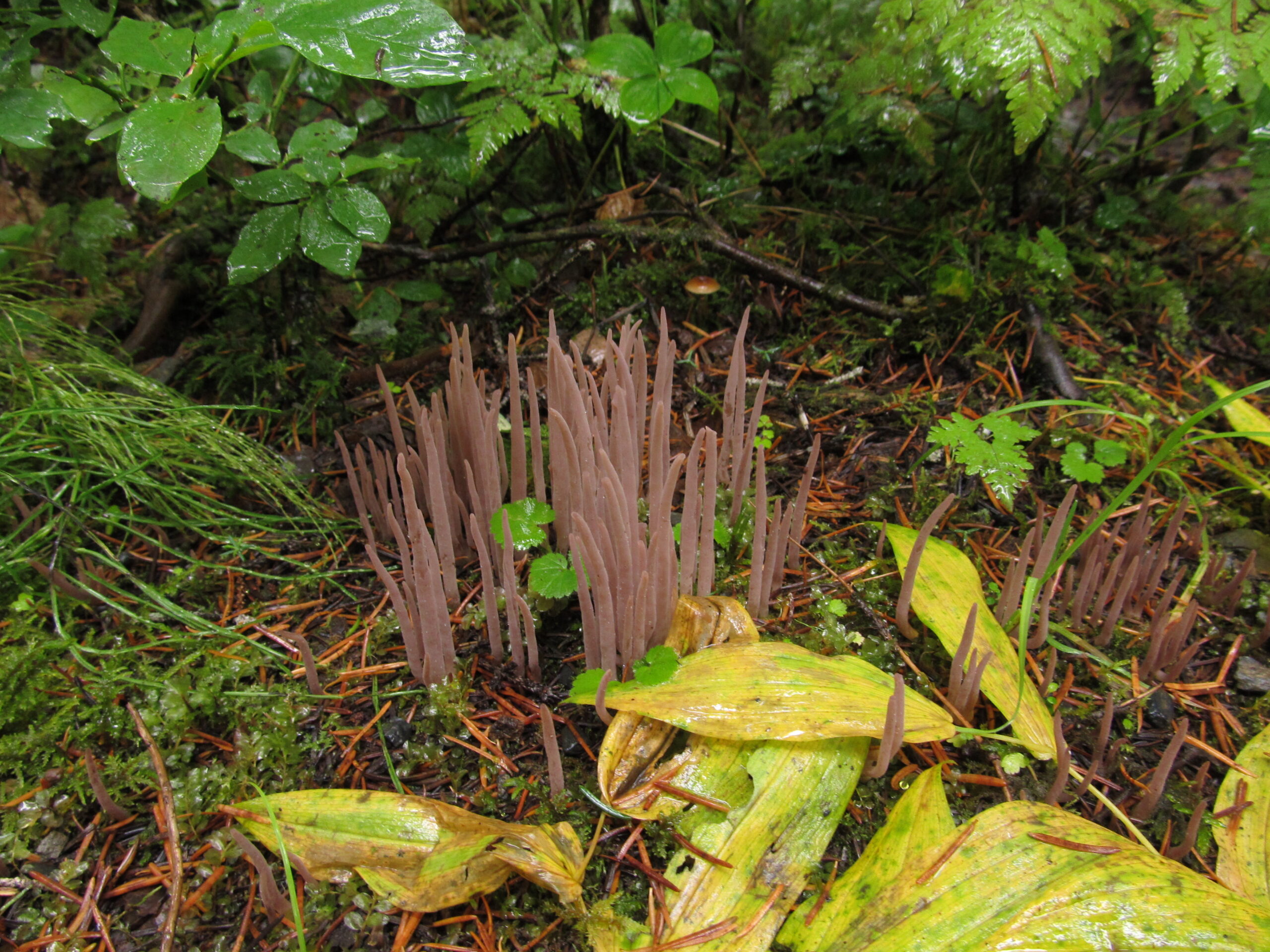
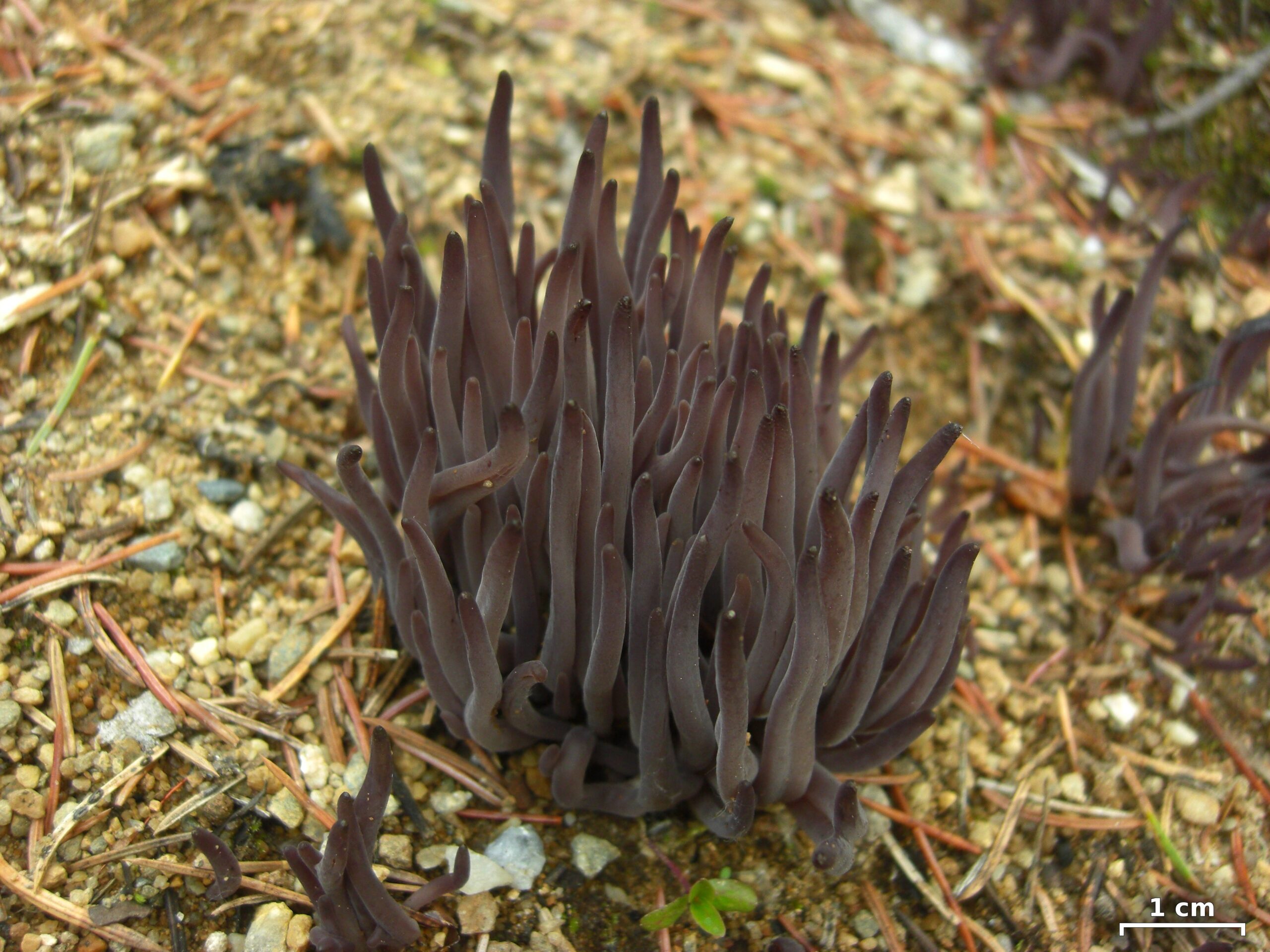
Purple Fairy Club (Alloclavaria purpurea)
Description: Many thin, fragile spindles (about 2–6 mm thick). Purple to lavender when fresh; fading to tan as they age.
When & Where: High-humidity northern boreal and alpine forests; summer–fall.
What else could it be: Other purple Clavaria species which may be branched or more typical of hardwood habitats.
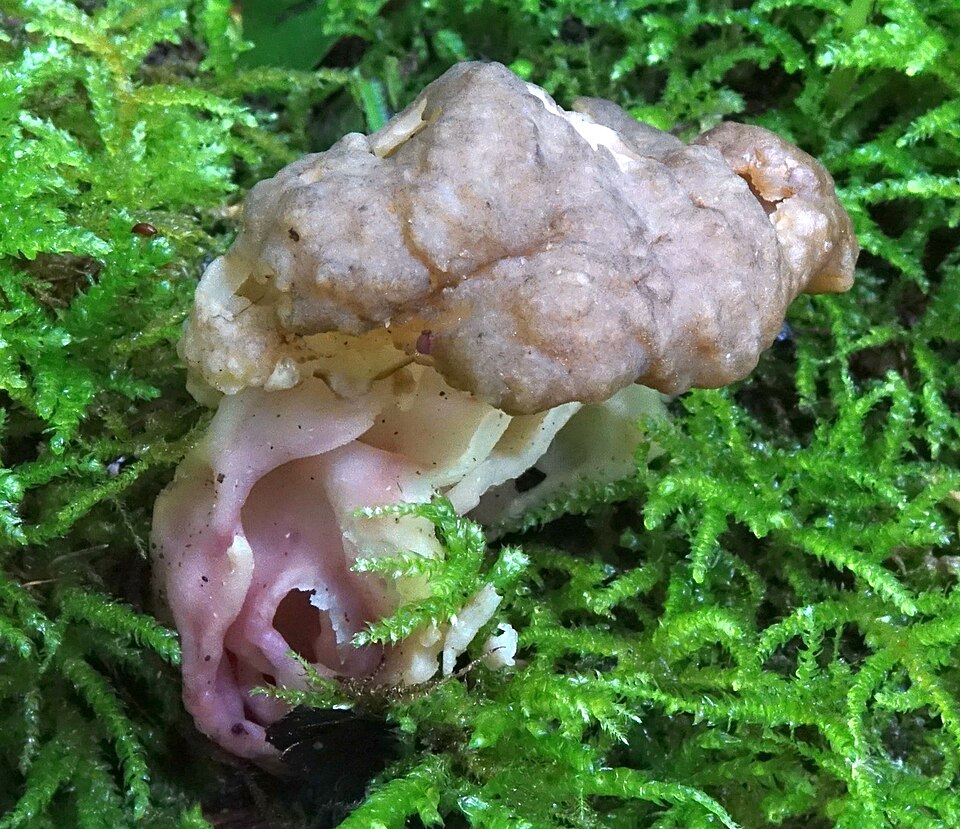
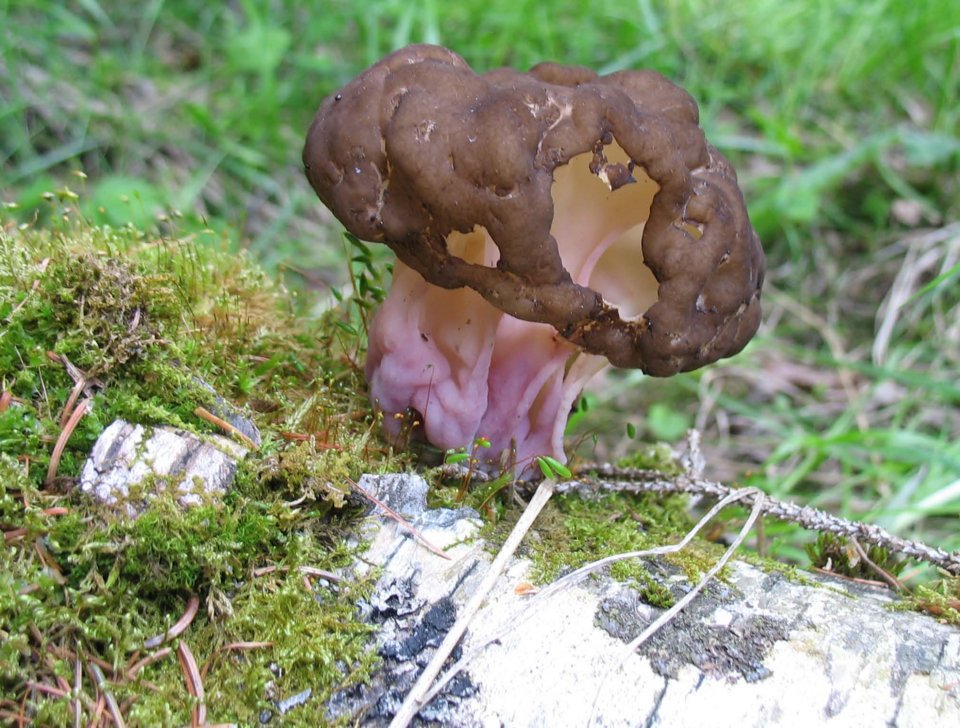
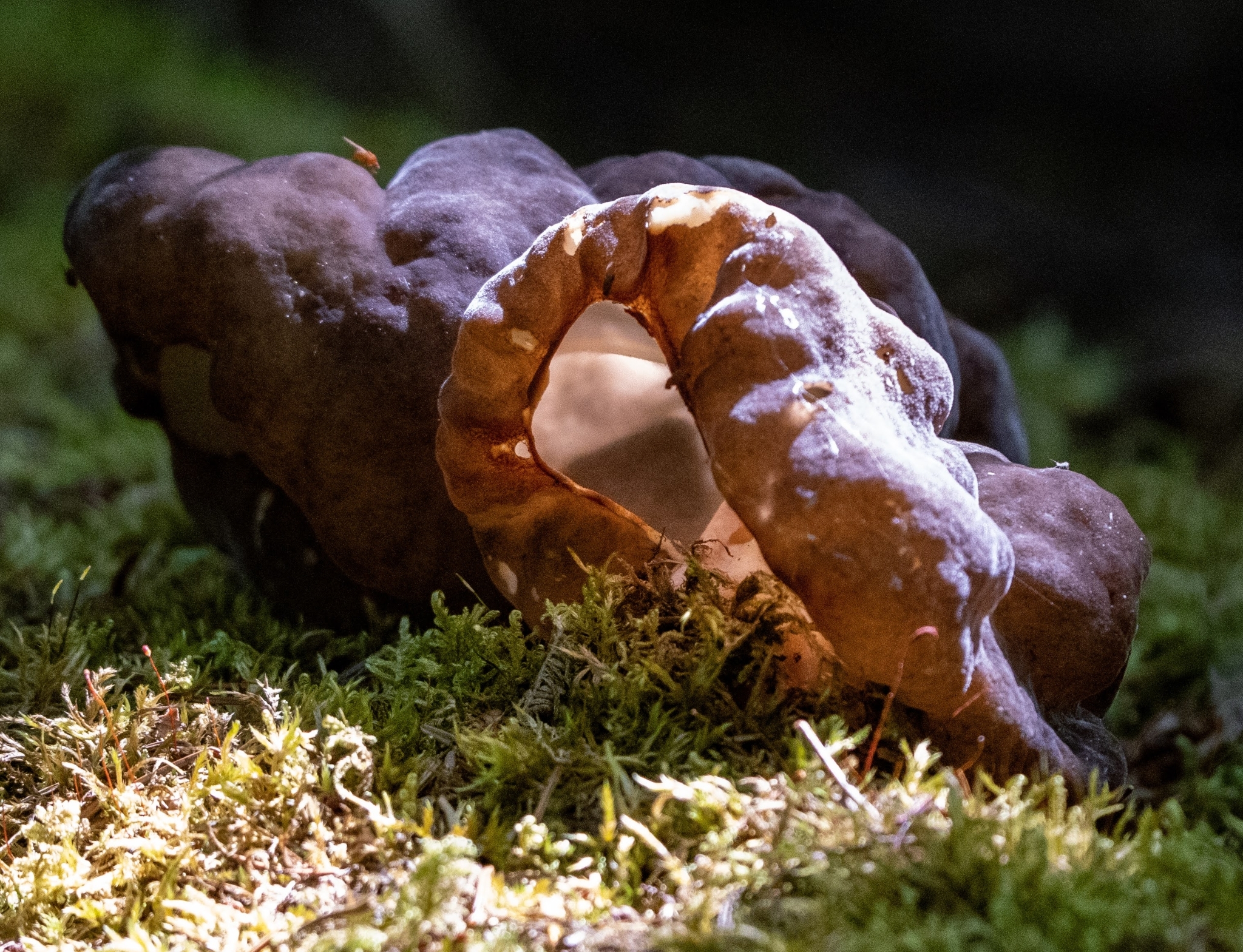
Round Spored Gyromitra (Gyromitra sphaerospora)
Description: A fragile false morel with a brown, cushion-shaped granular cap and incurved margin; ribbed pinkish-to-purplish stem; underside whitish to brownish.
When & Where: Northern Minnesota counties in late spring to early summer on well-decayed, mossy logs (conifer or hardwood).
What else could it be: Gyromitra brunnea (more red and angular) is the common spring false morel.
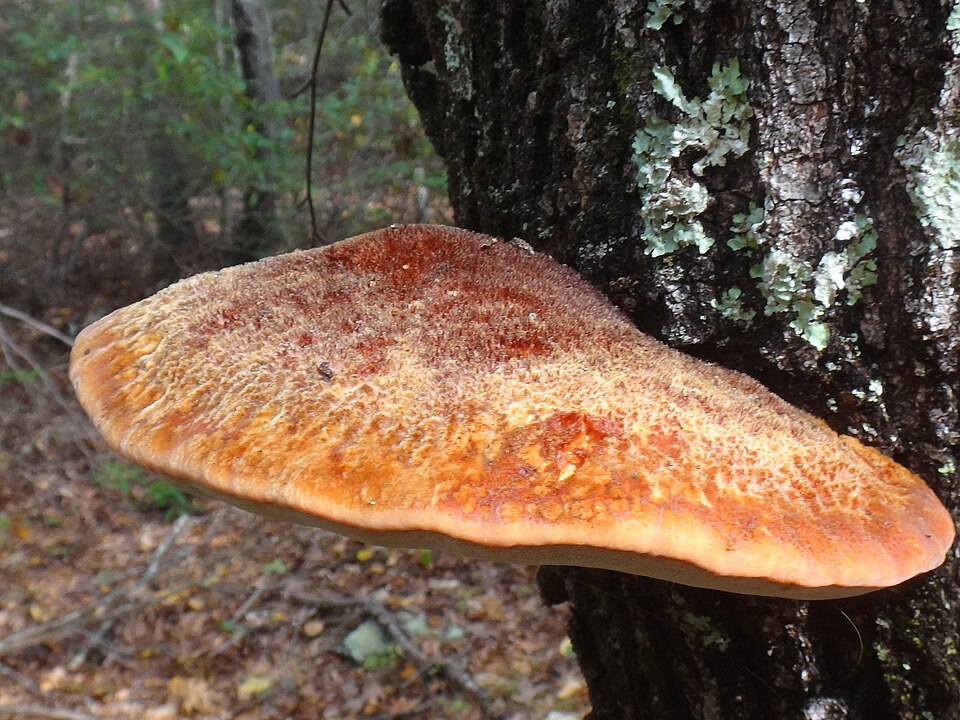
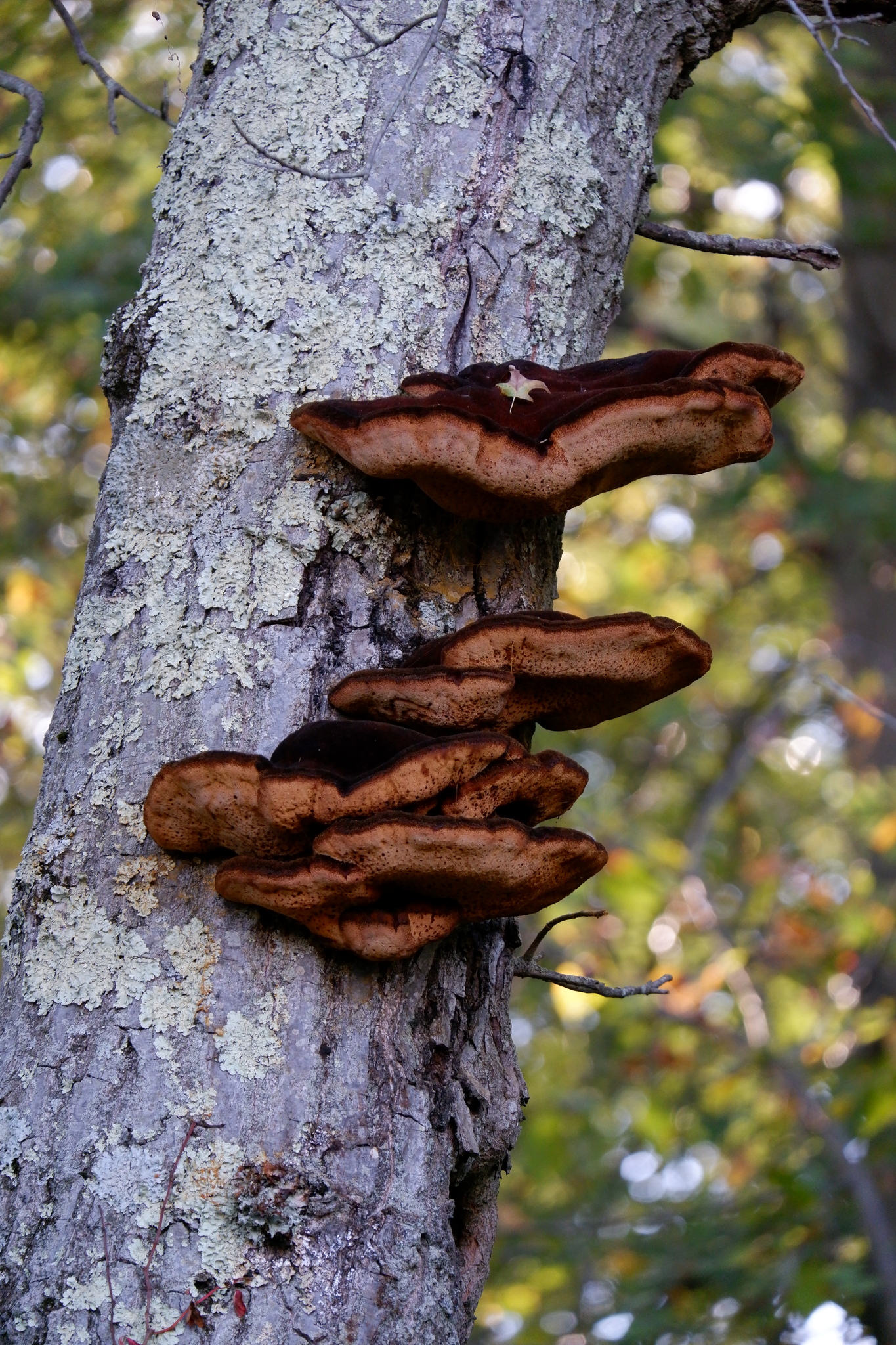
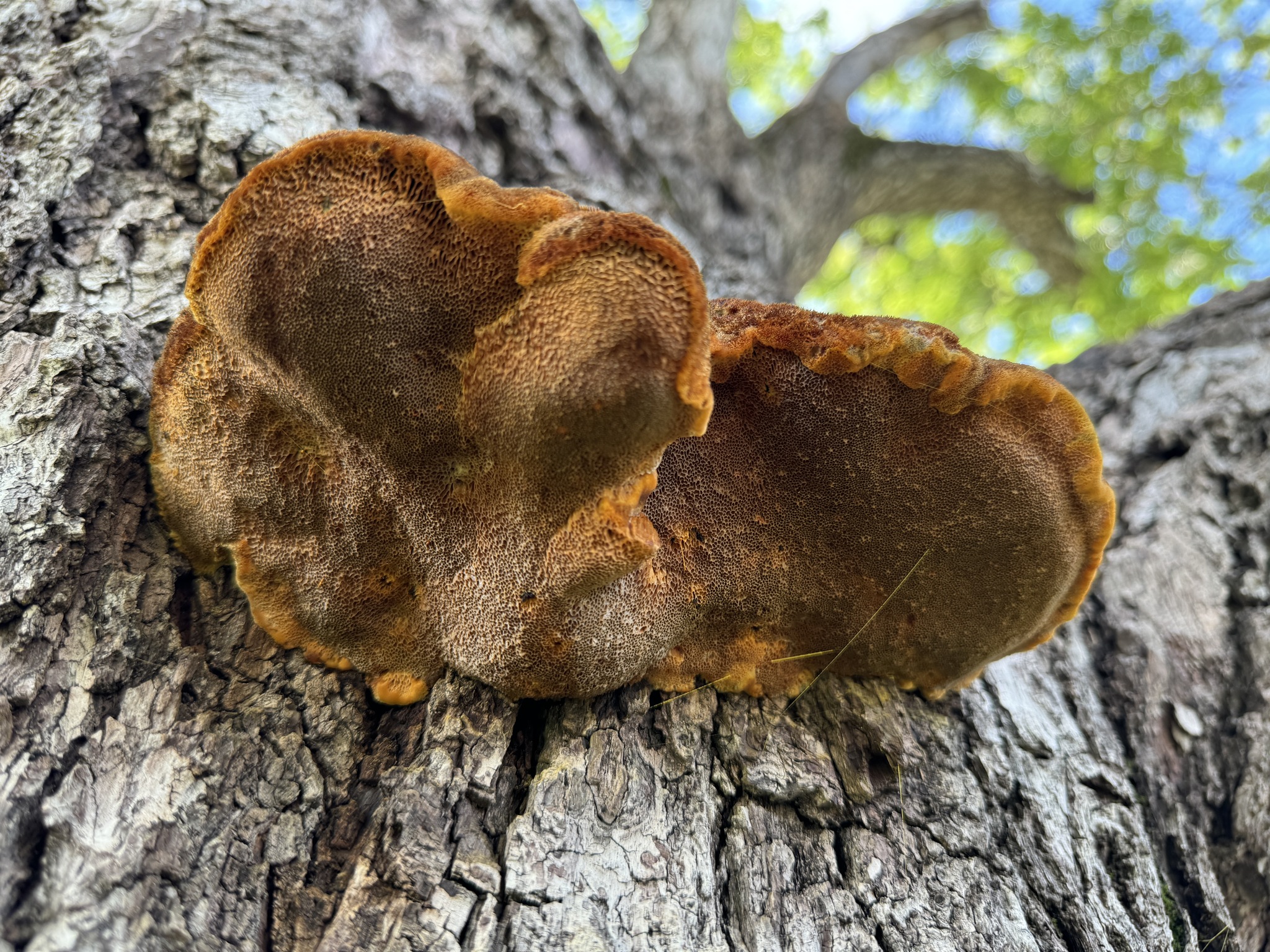
Shaggy Bracket (Inonotus hispidus)
Description: Hairy orange-ish upper surface; young specimens show concentric zones and may exude droplets; darkens/blackens with age. Brown spore print.
When & Where: Mid–late summer on dead and dying hardwoods.
What else could it be: Resinous polypore, dyer’s polypore, red-belted conk, or old chaga—confirm with the full feature set.
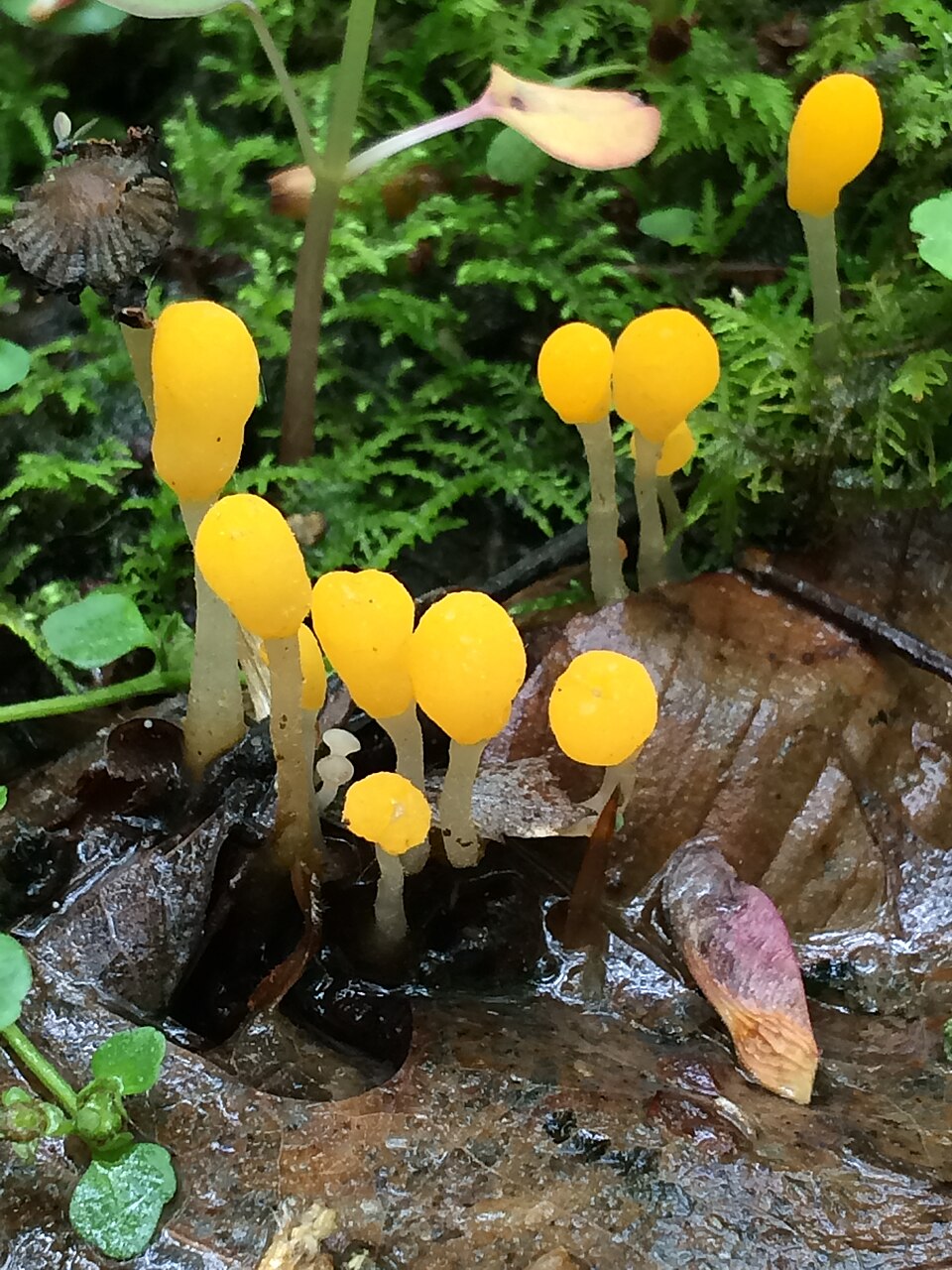
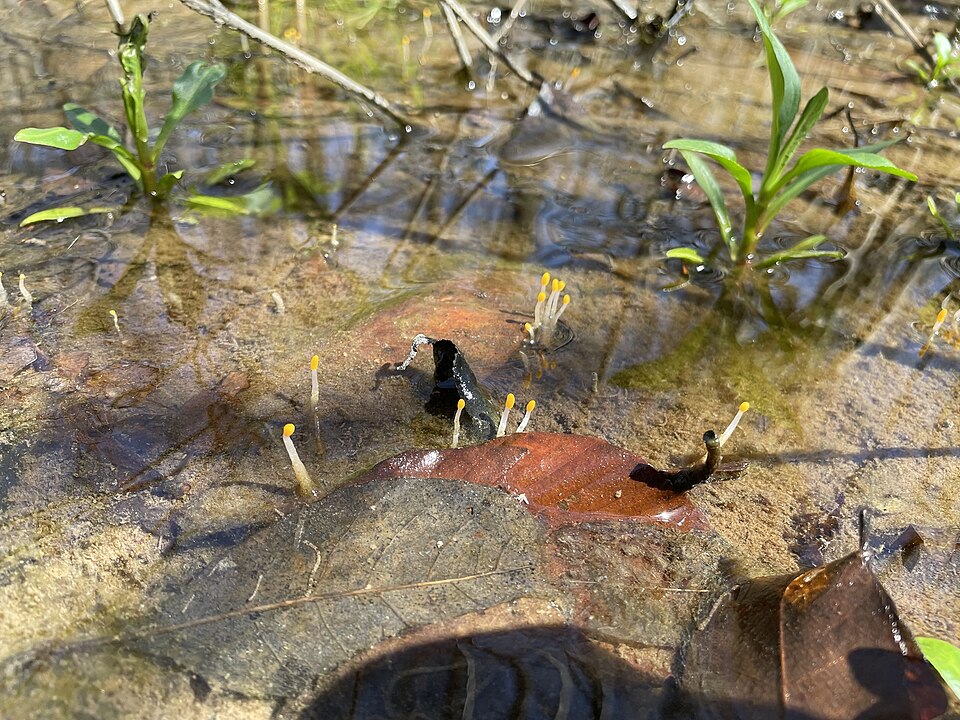
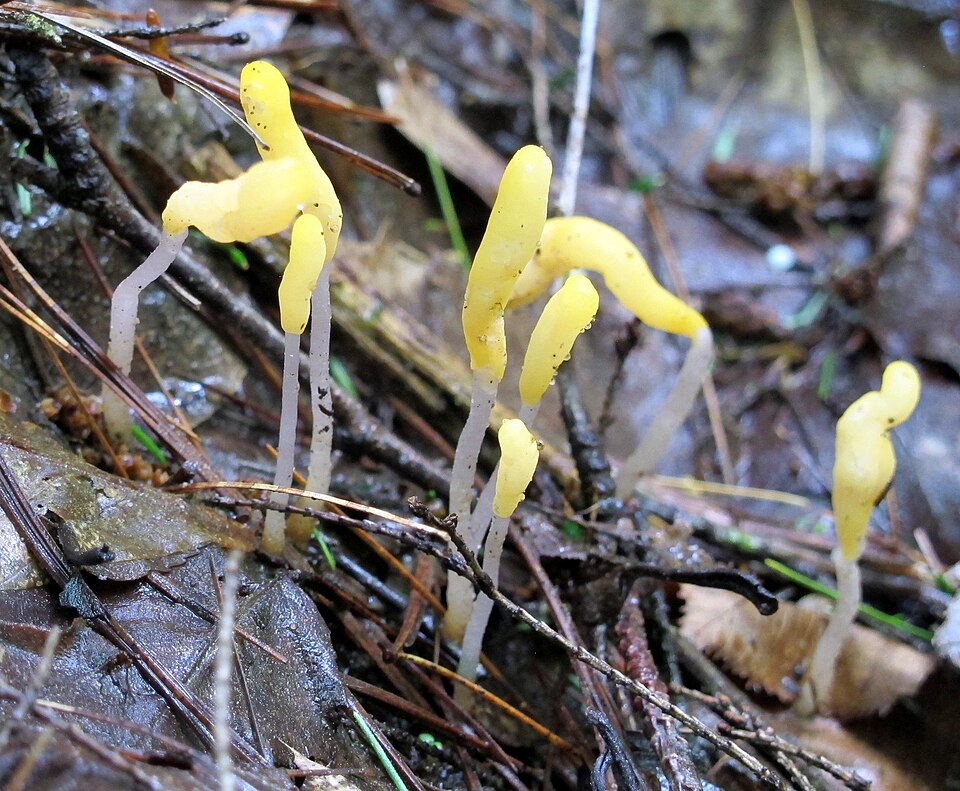
Swamp Beacons (Mitrula elegans)
Description: Typically slender, with a yellow-orange cap and translucent stipe.
When & Where: Spring in marshes and bogs on dead plant material (needles, cones, aquatic plants), often in standing water.
What else could it be: Yellow club fungi; the standing-water habitat is distinctive.
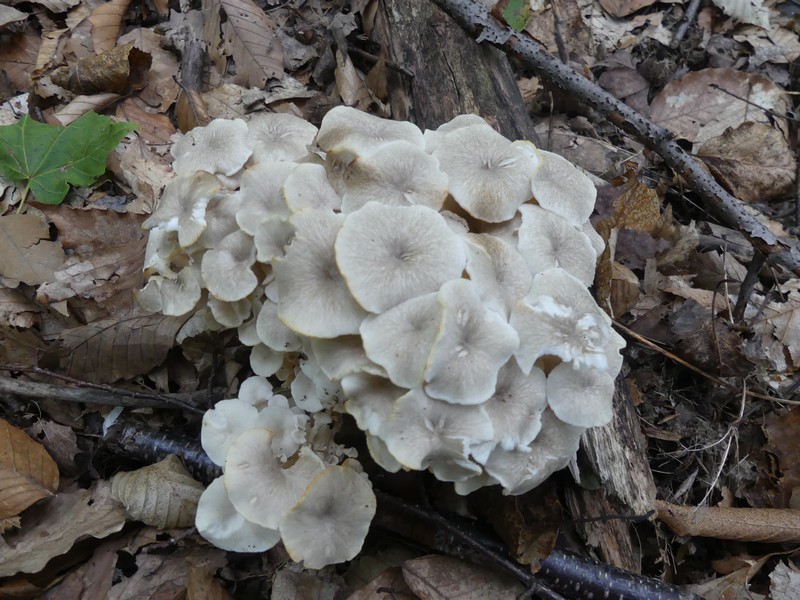
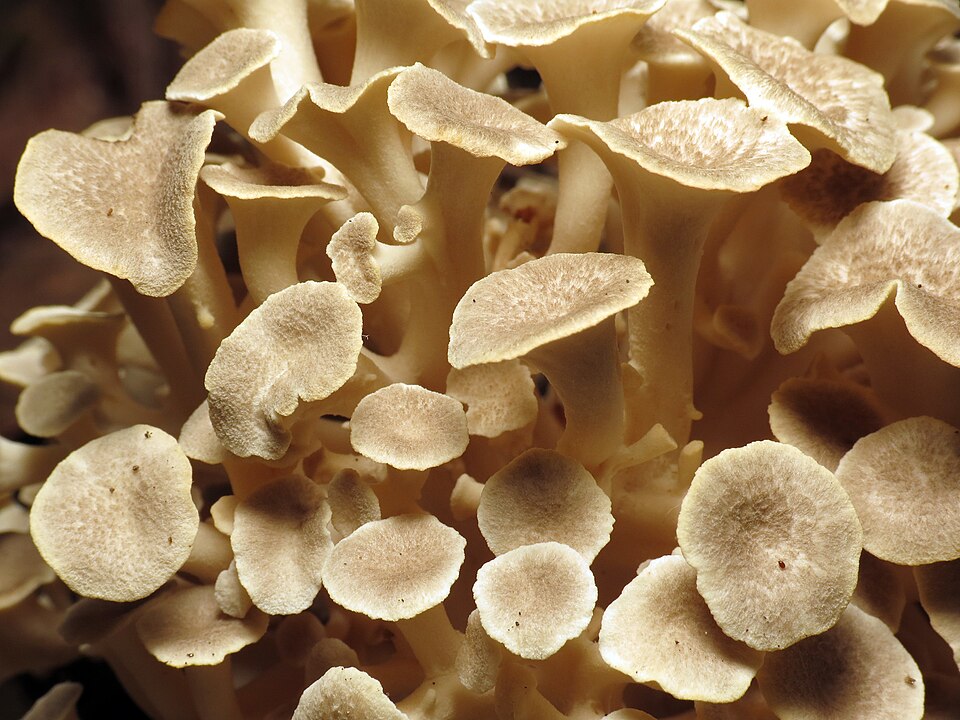

Umbrella Polypore (Polyporus umbellatus)
Description: Many small, roundish caps on discrete stems that fuse toward the base; funnel-like centers when young. White pore surface with decurrent pores; white spore print.
When & Where: Near bases/roots of hardwoods; most common in early summer (June) but possible spring–fall.
What else could it be: Grifola frondosa has bigger, more irregular fronds.
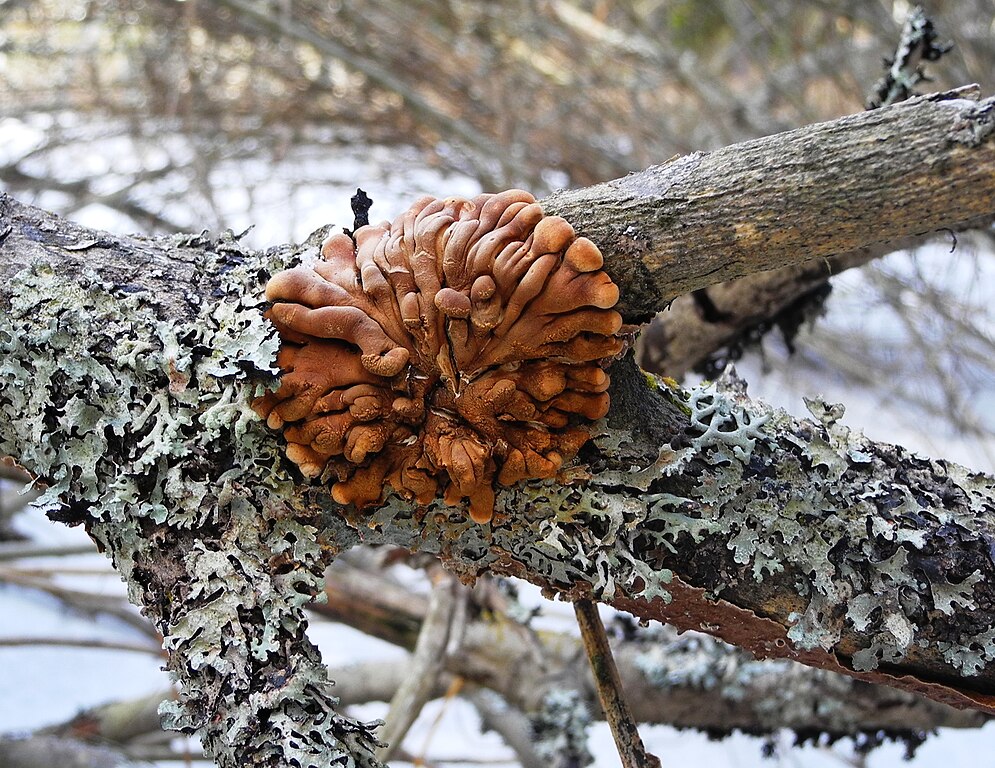
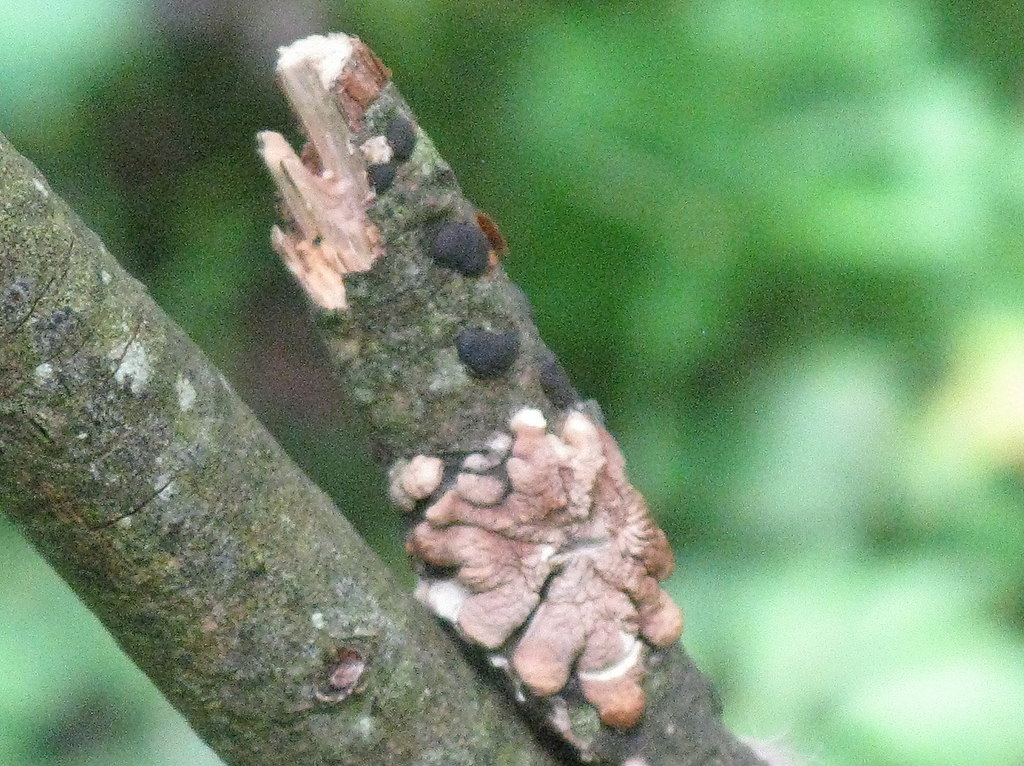
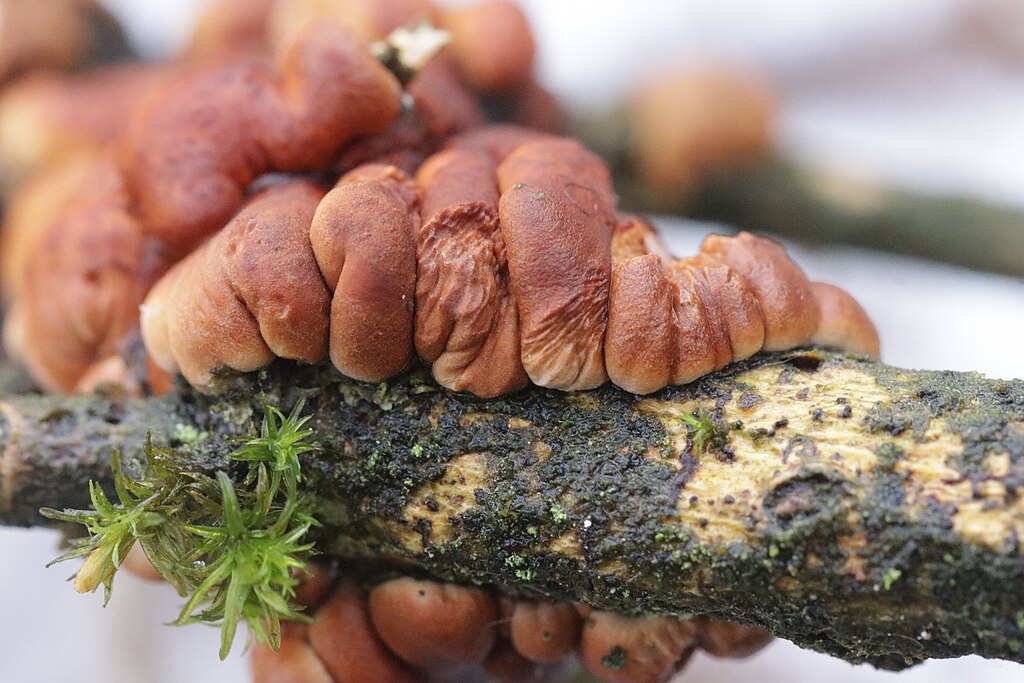
Willow Gloves (Hypocreopsis lichenoides)
Description: A lichen-like parasite on willow bark—flat, orange-brown, with finger-like protrusions radiating from a central point. Mature specimens may be dusted with darker spores.
When & Where: Year-round parasite of Willow Glue fungus (Hydnoporia tabacina), most common in dense willow thickets near water.
What else could it be: Hazel Gloves (Hypocreopsis rhododendri)—but that species is on rhododendron.
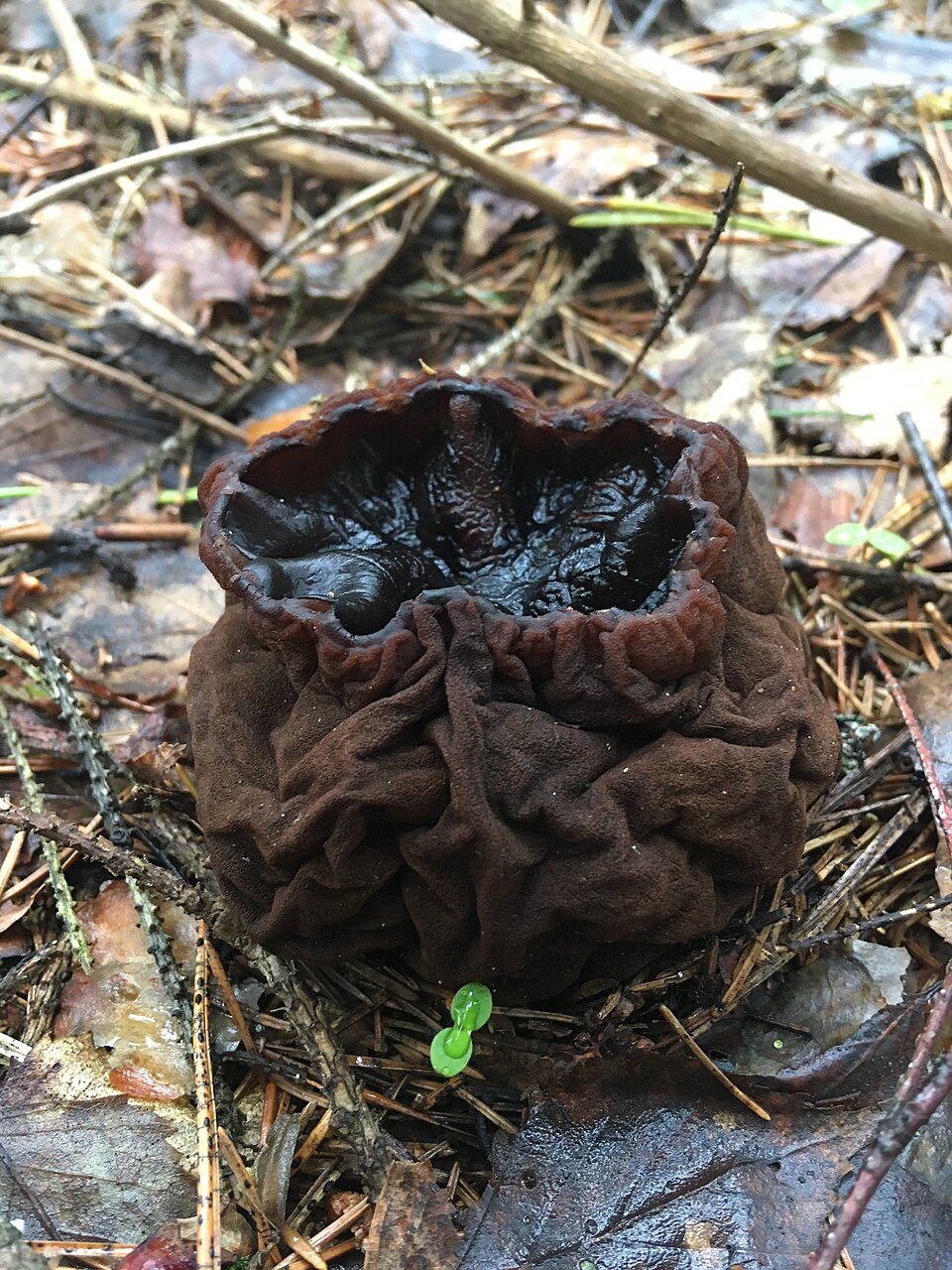
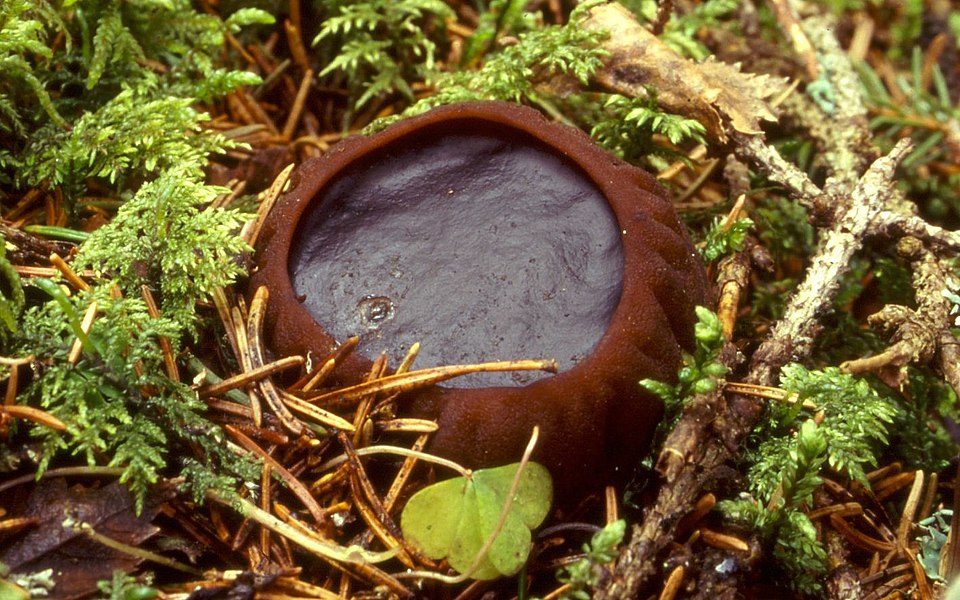
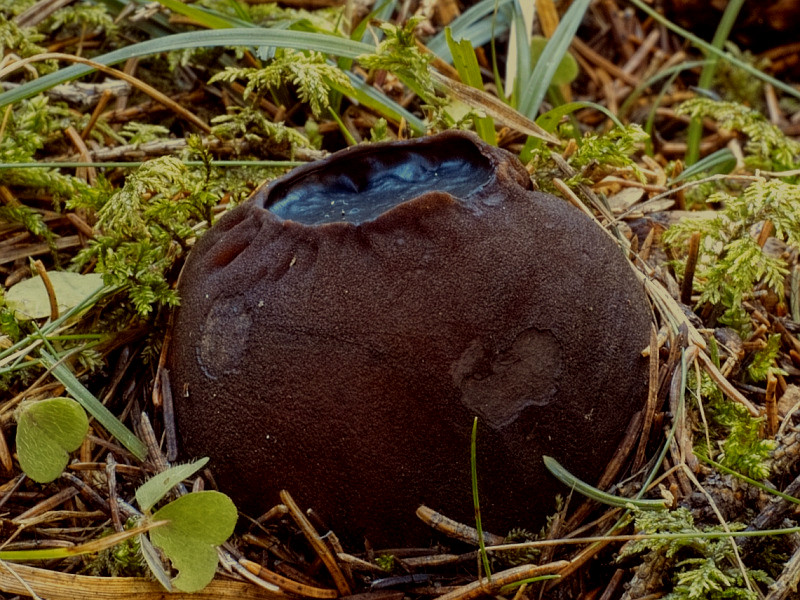
Witches Cauldron (Sarcosoma globosum)
Description: Large, round, gelatin-filled cup (about 4–10 cm) when young; later flattens with a bulging base. Listed as Near Threatened (IUCN).
When & Where: Mostly northern counties; shaded, moist pine-needle duff in spring—old mossy spruce stands with long forest continuity.
What else could it be: Devil’s Urn (Urnula craterium) is goblet-shaped, not gelatin-filled, and grows from decaying branches; Sarcosoma is on duff/litter.
Collecting Rare Fungi
In the Field
- Take photos: specimen in habitat; top, side & bottom; notable features (bruising/staining, droplets); include a field slip if possible.
- Make notes: substrate and surrounding vegetation; features photos might miss (smell, taste, spore color). The back of a field slip is perfect.
- Collect carefully: keep separate from other finds (tackle box or wax-paper bags). For DNA sequencing, a small amount (~quarter-size once dried) is enough. For the Bell, include a few specimens across development stages or a chunk of a large one.
At Home
- Dehydrate: low temps (95–115°F) until cracker-dry; keep the field slip with the same specimen in the dehydrator; store dried material in a freezer bag with the slip.
- Post your observation: Upload to iNaturalist and/or Mushroom Observer with photos, field notes, spore print/microscopy (if any), and your field slip #.
- Cross-reference: Put the iNat/MO observation number on the field slip, and make sure the slip number appears in your post.
- Hand-off option: If found at a foray or you can’t dehydrate, give the specimen to the foray leader / Funga Group or contact the Committee.
Are You Interested in Being a Part of Fungal Science?
One way to participate in this important citizen-led science is to submit observations to the websites iNaturalist and Mushroom Observer. Learn more about participating in MMS projects on iNaturalist.
Get involved with the MMS Funga Scientific Committee. This group works with the Bell Museum to submit rare fungal species for DNA sequencing.