
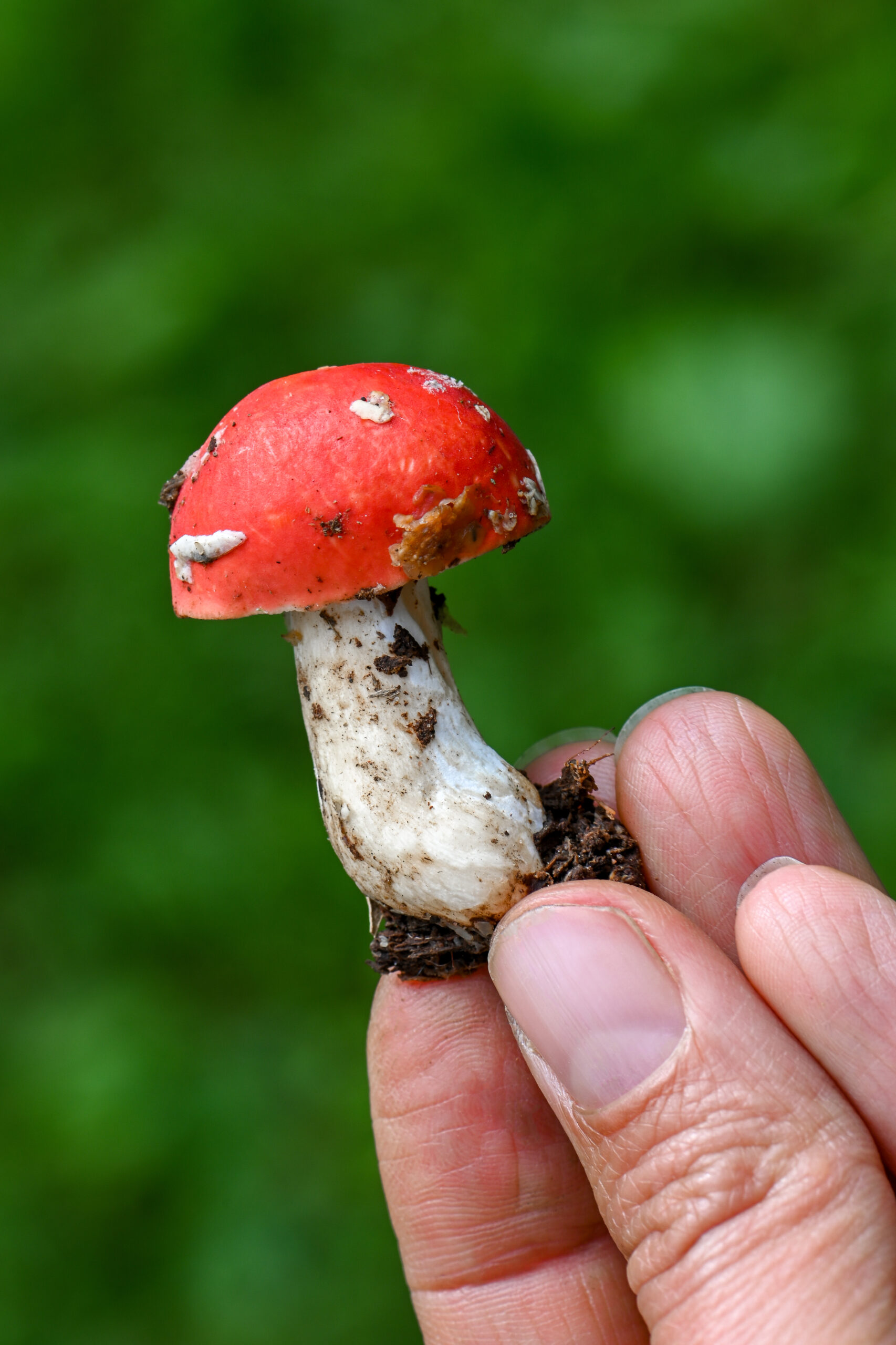
MMS uses Field Data Slips to keep each mushroom tied to the correct information, photos, and collector. These slips help the ID Table confirm your find, provide experts with the details they need to make an accurate identification, and allow specimens to be used for identification and records. Each slip represents either a single specimen or a connected cluster. Fill it out as clearly as you can. If you don’t know something, leave it blank. The slip simply captures what you observed in the field.
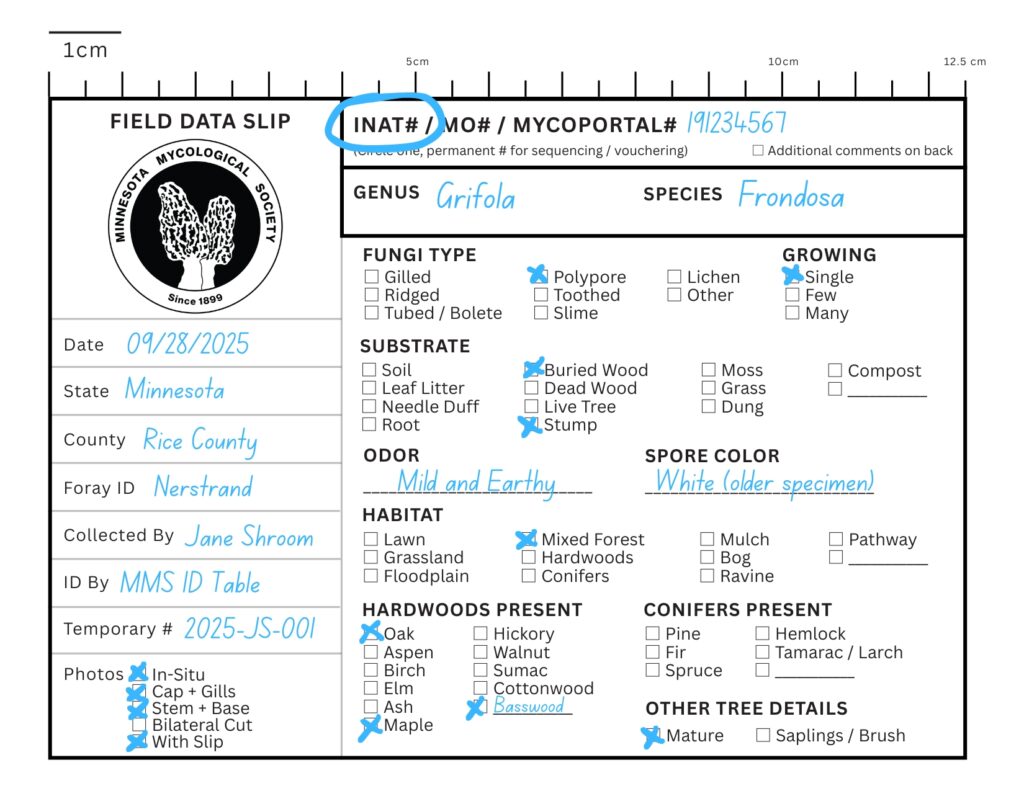
Field Information for Entry
| FIELD | WHAT TO ENTER | EXAMPLES |
|---|---|---|
| Date | The date you collected the mushroom. | 09/28/2025, June 14, 2026 |
| State | The state where the mushroom was found. | Minnesota, Wisconsin |
| County | The county of collection. | Rice Count, St. Louis County, Hennepin County |
| Foray ID | Name of the official event or description of your outing. | MMS Fall Foray, Solo Foray North Shore, Family Hike – State Park |
| Collected By | Name of the person who picked the mushroom. | Jane Shroom, Alex F. |
| ID By | Who identified the mushroom. | MMS ID Table, Self, Heather E., iNat: alan_rockefeller |
| Temporary # | Your personal tracking number for tracking the specimen. | 2025-JS-001, #022_bolete, Fall-Foray-7, blank if not used |
| Photos | Check all the types of photos you took. | In-situ (as found), Cap + underside, Stem + base, Bilateral cut, With slip |
| iNat# / MO# / MycoPortal# | Permanent ID number from online collection database. | iNat #191234567, MO# 617222, blank if not used |
| Genus | Write the genus if known. | Grifola, Russula, Amanita |
| Species | Write species name or leave blank. | frondosa, sp., unknown |
| Fungi Type | Choose the structure that best fits. | Gilled, Polypore, Tubed/Bolete, Ridged, Toothed, Slime, Lichen, Other |
| Substrate | What the mushroom is growing from (multiple allowed). | Soil, Leaf litter, Buried wood, Dead wood, Tree stump, Live tree, Moss, Grass, Dung, Compost |
| Odor | Describe any noticeable scent. | Mild and earthy, Almond-like, Fruity, Peppery, No distinct odor |
| Growing Pattern | How many mushrooms and how they are arranged. | Single (one or one cluster), Few (2–5), Many (larger group) |
| Spore Color | Record spore print color if observed, or fill in after making a spore print at home. | White, Cream, Pink, Rusty Brown, Olive |
| Habitat | The general environment where it grew. | Lawn, Grassland, Floodplain, Mixed forest, Hardwoods, Conifers, Mulch, Pathway, Ravine, Bog |
| Hardwoods Present | Check all hardwood tree species nearby. | Oak, Maple, Birch, Elm, Aspen, Ash, Cottonwood, Walnut |
| Conifers Present | Check any conifers in the area. | Pine, Spruce, Fir, Hemlock, Tamarack / Larch |
| Other Tree Details | Indicate forest age or structure. | Mature, Saplings / Brush |
| Additional Comments | Any notes that help with identification. | Color changes, Bruising reactions, Weather, Texture, Nearby plants, Unusual features |
Tips and Tricks
- Fill out what you confidently know in the field, and as much as you can later with more research.
- Keep the slip and the mushroom together, and use a paper label while drying to avoid confusion.
- The slip serves as identification; it is not a confirmation of edible mushrooms.
- When in doubt, bring the mushroom, the slip, and your photos to an MMS ID Event.
Download Blank Slips
The MMS Field Data Slip is a helpful tool for foragers to organize observations, keep specimens separate, and ensure that the correct details are recorded at the right time. For advanced scientific purposes, use a slip provided by the Funga Scientific Committee. Note: For best results and accurate measurements, field slips need to be printed at 100% on 8.5 x 11″ letter-sized paper.