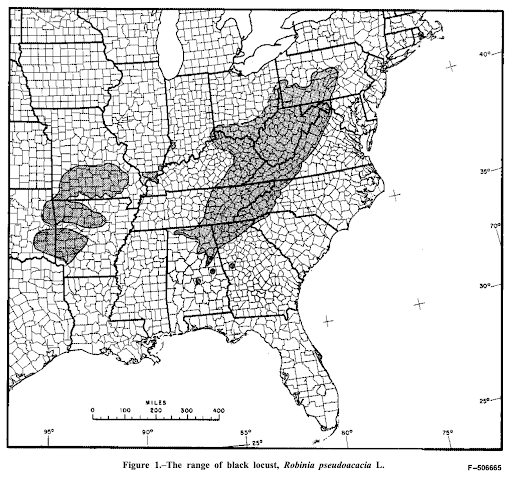
The invasive black locust is a leguminous and early successional tree native to the mid-Atlantic and south-central United States. It has been expanding its range west and north over the past century and is currently becoming established in Minnesota.
Black Locust as an Emerging Invasive Species
Similar to aspen species, black locust can reproduce asexually, producing new stems from underground rhizomes, and can quickly dominate early successional environments such as old fields, prairies, and oak savannas. Its ability to invade prairie and oak savanna habitats is in part due to the tree’s ability to develop deep taproots in dry, sandy soils.
Further, black locust growing in excessively drained, nutrient-poor soils can generate a source of bioavailable nitrogen via its root-associated bacterial symbionts, helping it thrive where other tree species struggle to survive. Inputs of nitrogen into the soil fundamentally alter the soil chemistry where black locust becomes established, leaving native plant species that are adapted to nutrient-poor habitats disadvantaged and pushed out of their niche.
In order to protect these sensitive habitats in Minnesota, black locust infestations are often the subject of removal by land managers. However, black locust will resprout vigorously after being cut, necessitating the use of chemical herbicides, which often require repeated applications to be successful.
Discovering Potential Fungal Pathogens
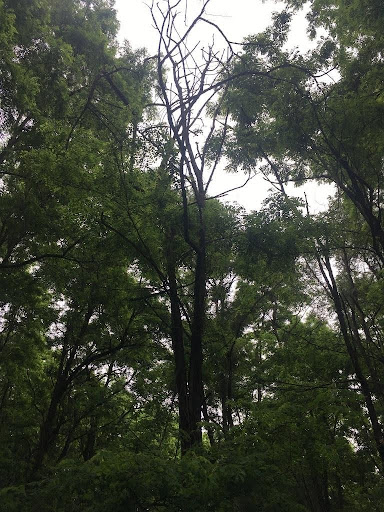
In 2024, during a hot and humid July afternoon, I noticed a black locust clone with numerous dead stems situated across the street from where I was setting up a fungal inoculation experiment on common buckthorn. During my lunch break, I forayed into the spires of locust and found that most of them were riddled with large, elongated cankers.
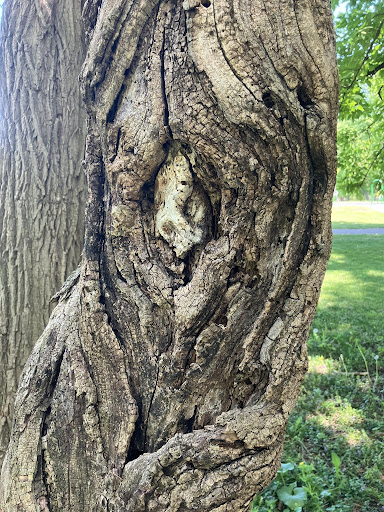
These cankers threatened to girdle the locust stems, and indeed, a handful of mature trees had completely died back. This wasn’t the only site where I found dying black locust that summer, and by the end of August, I had sampled 10 dying black locust trees from two different sites.
From these 10 trees, I isolated 57 fungal isolates and used DNA extraction and sequencing to identify these isolates as belonging to 26 different species. Two of these species, Diaporthe oncostoma and Camarosporidiella ribiniicola, had been reported as causing serious canker disease in black locust timber stands in Eastern Europe, where black locust has been introduced and is widely cultivated.
Upon further review of the plant pathology literature describing disease of black locust stands in Eastern Europe, I discovered that one of the fungal species I had isolated from a dying buckthorn tree in Minnesota, Fusarium sambucinum, had also been implicated in black locust disease in European plantations, causing wilt and death of mature trees.
What exciting finds!
Developing a Fungal-Based Control Method
Motivated by a desire to develop ecologically sensitive methods for controlling invasive trees, my advisor, Bob Blanchette, and I wrote a proposal to develop a mycoherbicide for black locust in Minnesota.
Thanks to our grant being awarded by the Minnesota Invasive Terrestrial Plants and Pests Center (MITPPC), our lab is able to dedicate four years of research to this topic.

This summer, we will primarily be focused on locating sites with dying black locust, sampling diseased trees from these sites, and isolating fungi from diseased tissue. If you come across diseased black locust this summer, you can report your observation using the Google reporting form linked by the QR code and also found on the “Biological control of black locust using fungi” project webpage on the MITPPC website.
Fungi collected from dying black locust this summer will be inoculated into healthy black locust saplings in the greenhouse this winter to screen them for their pathogenicity. Isolates that cause the most severe disease symptoms will be selected for field studies the following summer.
About Ryan Franke
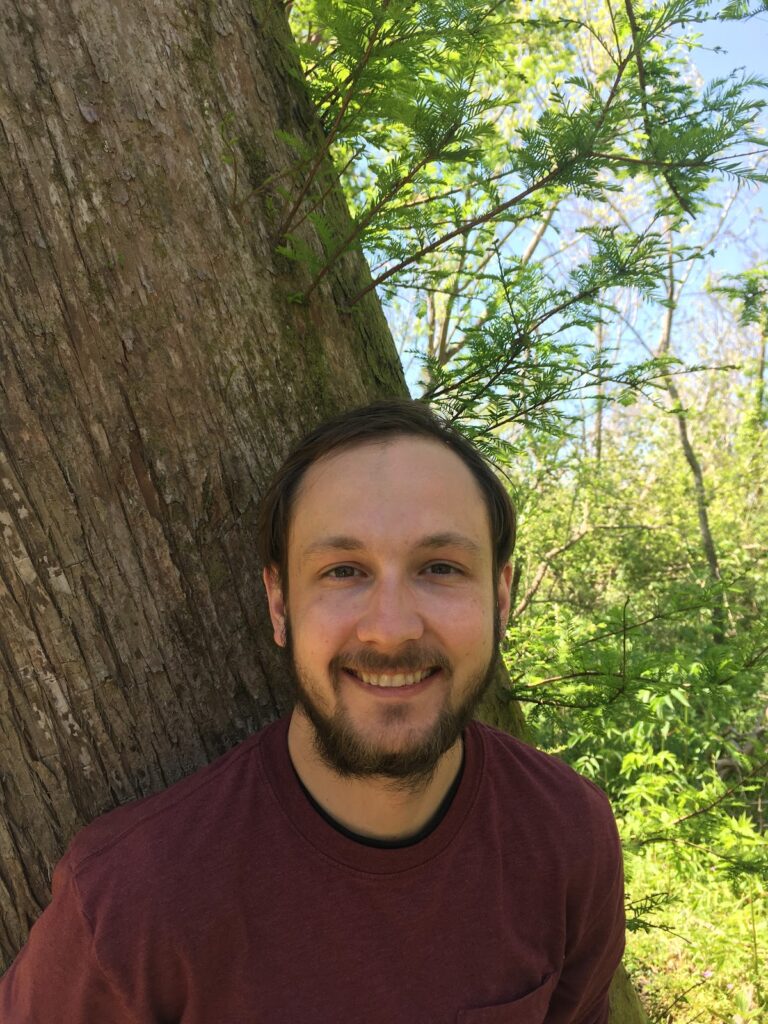
Ryan grew up in Eagan, MN and learned to revere the natural world at a young age. During a fall camping trip around Lake Superior in 2015, he became fascinated with fungi and shortly thereafter joined the Minnesota Mycological Society. His fascination with fungi mushroomed after joining the society, opening a gourmet mushroom cultivation business in 2017, editing the MMS newsletter from 2018-2020, and most recently joining the mycology focused Forest Pathology Lab at the UMN in 2023. Ryan is also involved in research on biological control of invasive buckthorn with native fungi.
See Ryan’s Presentation on the MMS YouTube channel