
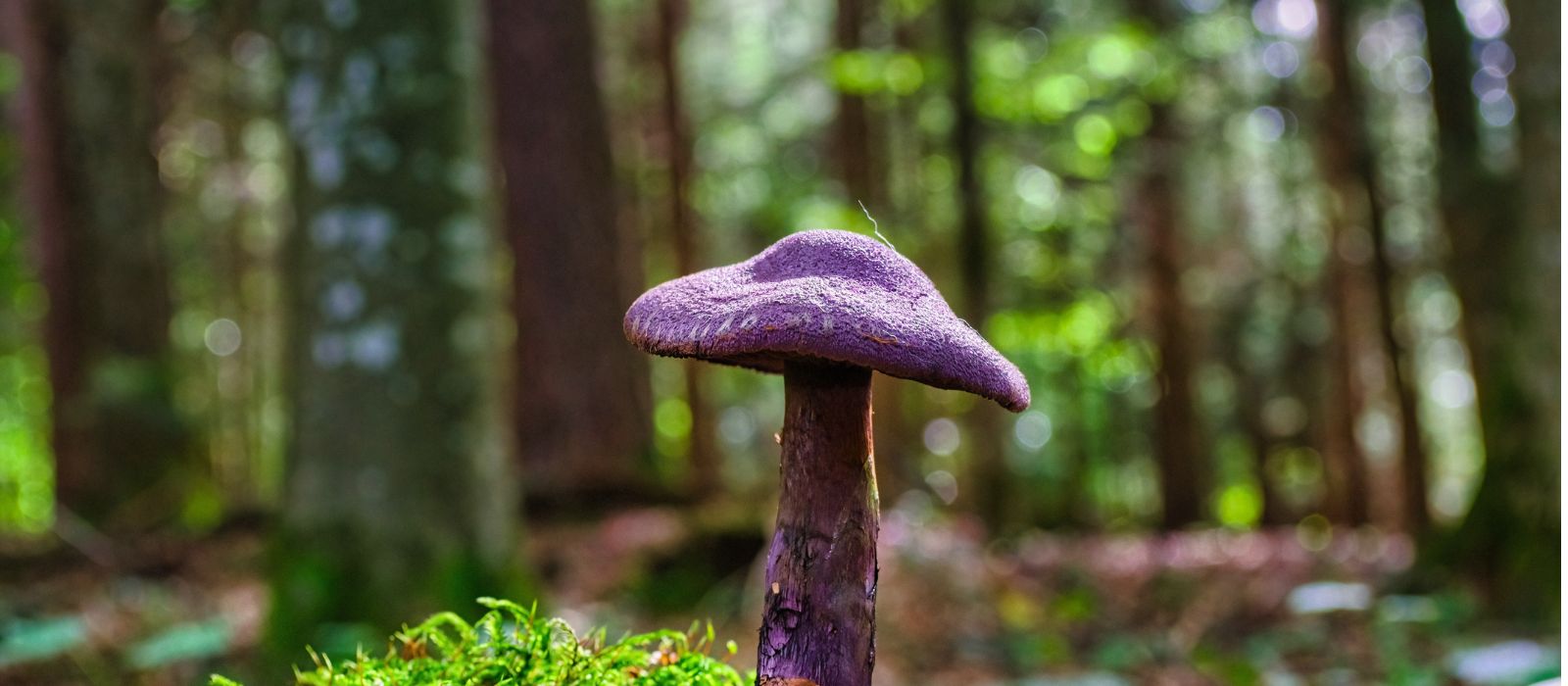
Graduate 2026 Scholarship Recipients, May
This May member meeting will feature our 2026 MMS Graduate Scholarship recipients, Michael Malone and Jason Raiti, remotely via Zoom
The Minnesota Mycological Society (MMS) is continuing our scholarship program for University of Minnesota and University of Wisconsin students (any campus location) currently enrolled in graduate-level studies with an emphasis on mycology. Each year, MMS gives away monetary scholarships to graduate students at the University of Minnesota and the University of Wisconsin. Come check out their presentations highlighting their graduate thesis topics!
This meeting is free and open to the public. Presentations may be recorded and posted on the MMS YouTube channel. Members receive Zoom link on meeting announcements and reminders. Anyone can click the button below to provide their contact info and receive the Zoom link for this meeting.
Michael Malone
The phylogeography of Polynesian Xylariales; Do Laboulbenian fungi affect beetle behavior?
This presentation consists of two research projects conducted at UWL:
- Polynesian fungi are poorly documented, and the deficit in biological data is even greater in Polynesian taxa of understudied groups such as the Xylariales (dead man’s fingers, cramp balls, etc.). Studying Polynesian fungi in general is important for understanding the evolutionary relatedness of these fungi to the continental types. To help reach this goal, Michael developed a branching evolutionary diagram with a global distribution of Xylariales, including Polynesian representatives sequenced during his thesis. Additionally, he conducted a biogeographical signaling analysis to assess immediate genetic similarity of Polynesian taxa to matching sequences on a global scale and will share the results in this presentation.
- The Laboulbeniales are among the most poorly studied groups of fungi to date. Among many reasons, the most apparent is their microscopic size and a specialized association with arthropods (mainly beetles). Many questions about the Laboulbeniales have gone unanswered, including their influence on the behavior of their hosts. Michael organized a lab-based observation experiment with UWL undergraduate Zachary Morgan. The objective was to assess the difference in frequency of grooming/sanitary behaviors and food consumption between beetles with no fungal infection versus those with Laboulbenian fungi present. Preliminary results will be disclosed in this presentation.
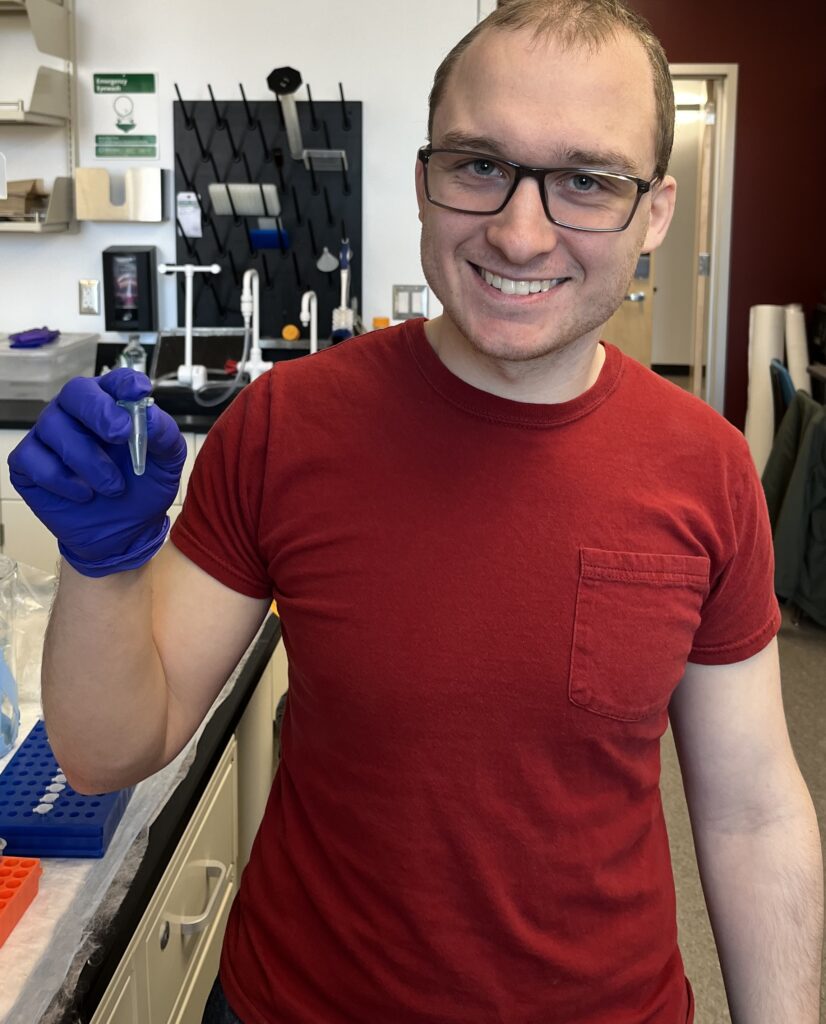
Michael Malone received his Master’s degree from the University of Wisconsin–La Crosse (UWL), where he studied Polynesian Xylariales. Previously, he studied Laboulbeniales at Syracuse University during his undergrad and will be studying novel fungi of the New Jersey Pine Barrens at Rutgers University this fall. In general, he likes to study the ecology and phylogenetics of obscure fungi, particularly within the Ascomycota.
Learn more about Michael’s thesis work: UW–La Crosse MINDS research repository
Jason Raiti
What shapes spore shape?
Have you ever looked around at the incredible diversity of shapes in nature and asked why? The branching fractals of trees and roots, the arc of a wing, the shape of a fungal spore: what are they all for!? If so, this question is for you!
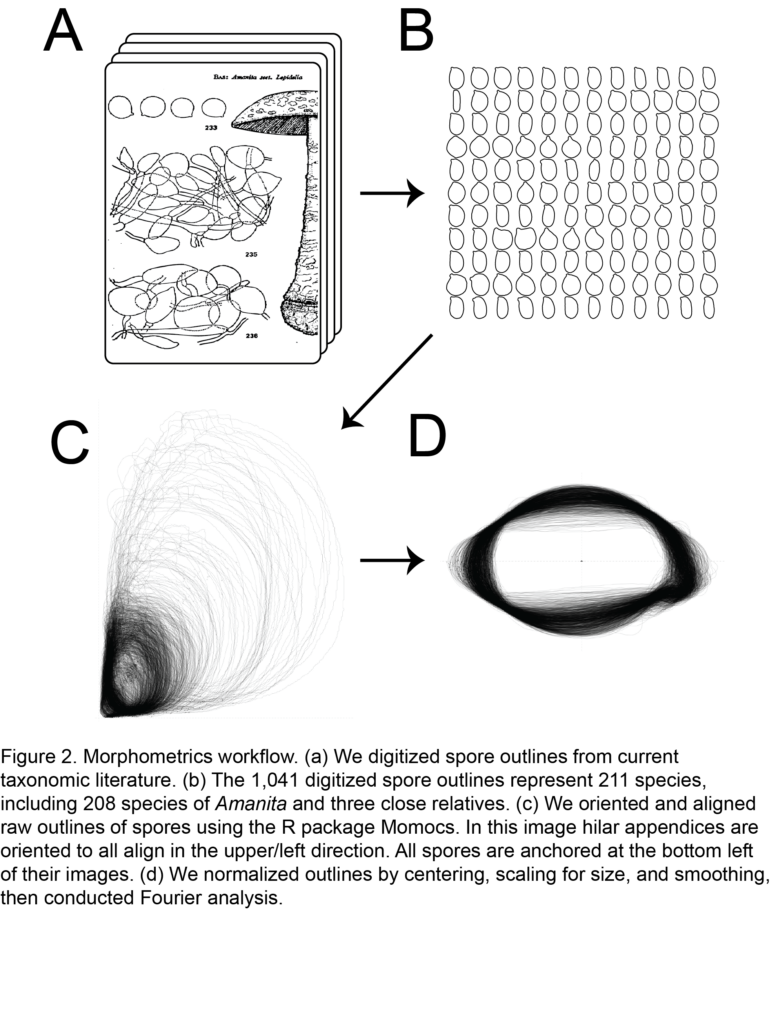

Jason Raiti is currently pursuing a graduate degree in Botany at the University of Wisconsin–Madison, where he studies the evolutionary morphology of Amanita spores in the Pringle Lab. His research integrates ecology, phylogenetics, and computational analysis, with a strong focus on science communication and fungal conservation. He also serves as a board member for the Madison Mycological Society, where he runs their speaker series.
Prior to joining UW–Madison, he served as a board member of the Central Texas Mycological Society, leading hands-on workshops in low-tech mushroom cultivation and wild-to-agar cloning. His work has included cultivating bioluminescent fungi in Brazil, co-authoring a paper on robotic water sampling for IROS, and contributing to NASA-affiliated robotics projects, including an autonomous lunar rover and a space-trash cleaning robot.
Outside of academia, he enjoys doing anything outdoors (hiking, foraging, surfing, climbing, running) but also loves to play guitar and make any kind of art or poetry. Jason believes that creativity and science are deeply intertwined, and strives to bring a sense of wonder and playfulness to everything he does.
Explore Jason’s work: jasonraiti.org | Pringle Lab | University of Wisconsin–Madison | The Sclerotia Project
FOR MORE INFORMATION
How to join a Zoom meeting: You do not need a Zoom account, but you will need the Zoom app installed on your desktop or mobile device. You can either download the Zoom app in advance here. Or, you will be automatically prompted to download and install the Zoom app when you click on a meeting link for the first time. You can also join a test meeting at any time at https://zoom.us/test. Watch a video on how to join a Zoom meeting here.