In September of 2024, Gretchen and I visited Japan, a big vacation. As part of that trip, we met a group of Japanese mycologists in the woods. I reported on this trip in the January 2025 monthly meeting of the MMS. Here are a few moments from that trip that still stand out to me.
Common Traits of Foragers Worldwide
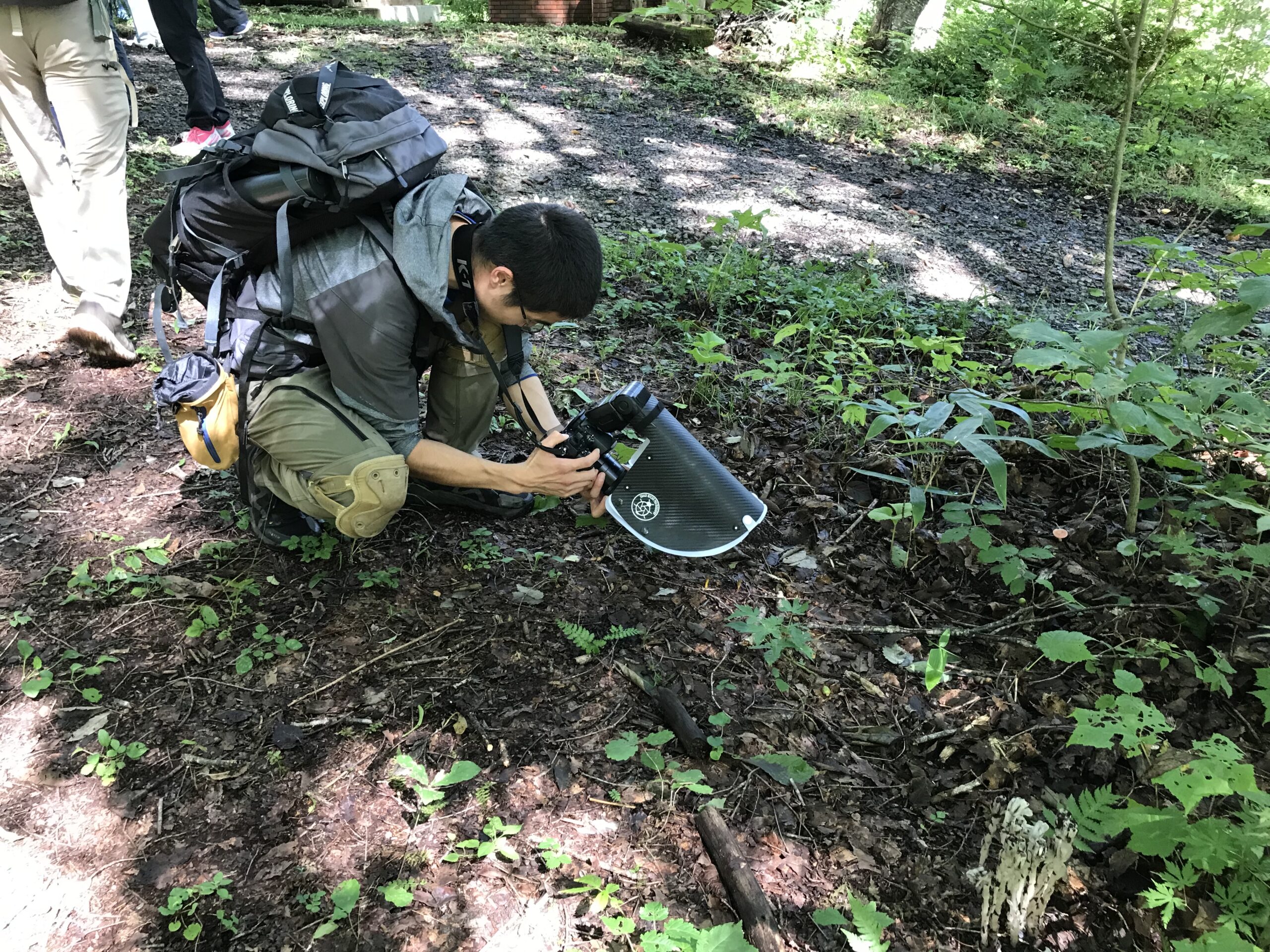
Mushroom hunters in the woods all wear the same gear. It is the same all over the world. Without any coordination, we all show up wearing sturdy shoes, tough pants, long-sleeved shirts, and hats. This is one of the things that still brings a smile to my face; we didn’t know each other at all, yet a common interest in mushrooms brought us together, ready for the same activity.
U.S. mushroom hunters all have a lot of mushroom photos on our phones. It is the same in Japan. As we walked along, we talked about a mushroom similar to something we had just viewed. I showed photos of chanterelles (not as widespread in Japan). Dr. Masumoto shared a photo of a large colander full of Amanita ceararea. He mentioned that the soup that night was very enjoyable. Photos bring us together.
There are three mushrooms we found that stay close to me.
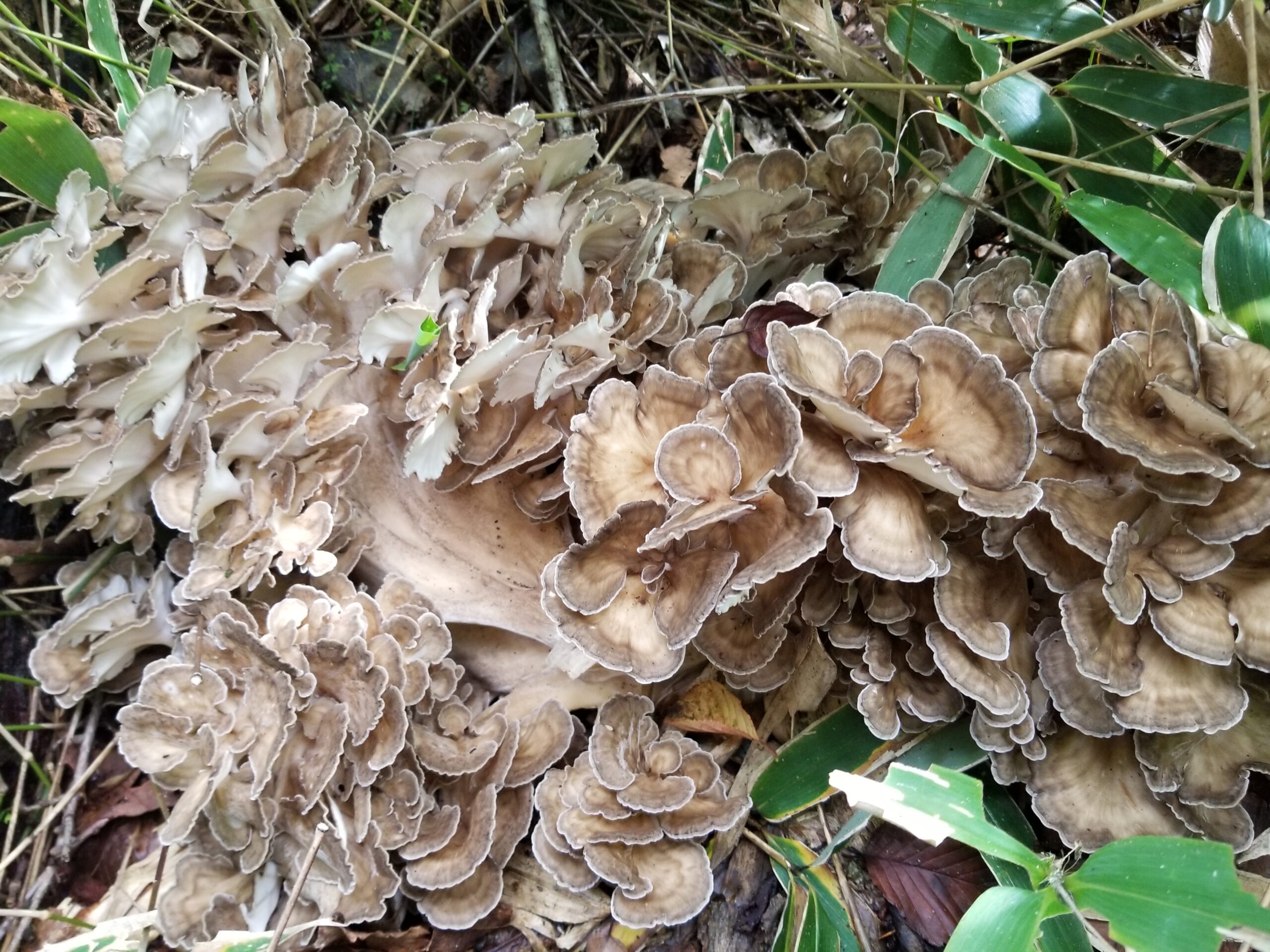
Maitake
Maitake or hen-of-the-woods (Grifola fondosa) is the same in Japan as in Minnesota. It grows at the base of trees, might have some bugs, and is delicious. We visited a tempura restaurant and discovered that maitake is a common mushroom in dining. In bento boxes and on grocery shelves, maitake was the mushroom used for tempura. In discussion with our hosts, I learned that a find of any large maitake is prized; the thrill of a great discovery transcends borders and cultures.
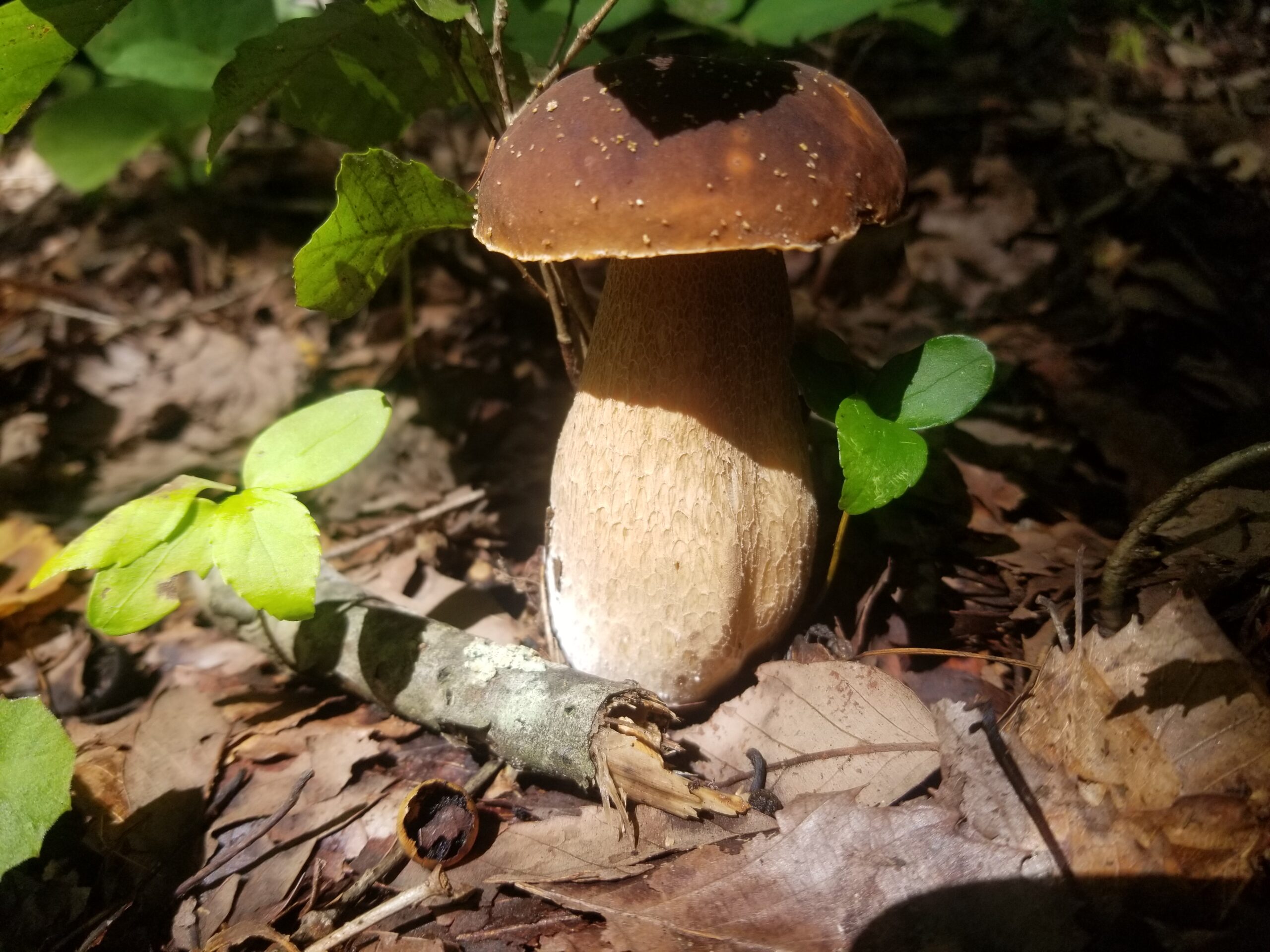
Boletus Reticulatus
Boletus reticulatus (false bolete) is nearly an identical twin of Boletus edulis (Porcini). Our Japan mushroom guide (Japanese mycologists give gifts!) states that this is similar to the porcini and is ideal for western-style cooking. The only easily distinguishing feature between B. reticulatus and B. edulis is a narrow band of white at the edge of the cap. FYI: The forest we visited did not allow collecting for eating, so we are unable to confirm.
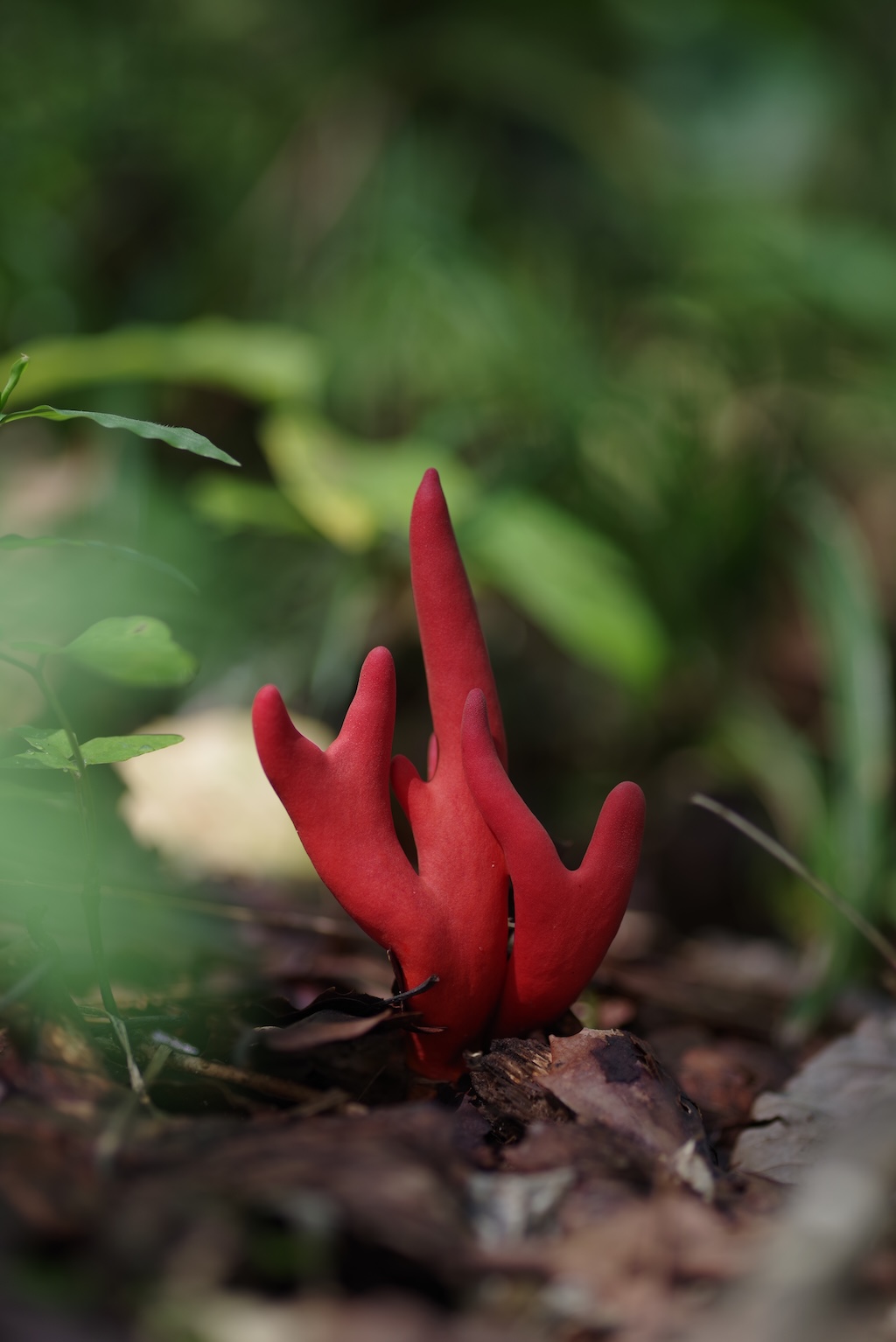
Kaentake
Trichoderma cornu-damae (Kaentake). This remarkable mushroom is stunning, with bright red, sometimes-branching stalks, growing in clusters from the ground. As I approached to have a closer look, the warning of “Don’t touch it!” was uttered. I learned that this is an exceptionally toxic and dangerous mushroom; contact with it causes skin sores. I don’t understand half the warnings in the Wikipedia entry on this mushroom, but I do understand that ingesting it will be intensely uncomfortable and probably fatal. Move over, destroying angel, there’s something more dangerous out there. Interestingly, later outside Kyoto, we found a warning to the public about the dangers of contact with this mushroom. I’ve never seen a warning to the general public in America about a mushroom–No taste and spit testing in Japan.
How Japanese Foraging is Unique
I must remark on how the time in the woods was quite a bit different from an MMS foray. Once introductions were completed, all the Japanese people immediately started looking directly at the ground, near the little benches and sheds in the vicinity. I am convinced they found every mushroom in the woods that day, from the larger boletes to tiny, in fact, microscopic mushrooms. Everything was identified and discussed. Perhaps this is because my contact is a board member of the Mycological Society of Japan, a scientific community. I didn’t ask that question, so it is difficult to know.
Following our trip, I have exchanged messages with several of our guides. We share photos of mushrooms and our ideas about culture. Having an international pen-pal is so special.
Why I Recommend Traveling
People have asked me if I found Japanese people to be cold or impersonal. I lived in Germany and travelled quite a bit in Europe, so I have met people from many different countries. First off, individuals all act differently, so generalisations are difficult. The culture of Japan is very different from America, and there is a greater effort to preserve it. Yet I saw some of the most advanced engineering and cutting-edge clothes. And throughout my travels, I’ve never had more people just come up to me and provide help: The kind woman at the Gotemba bus station who used her phone translator to help us get to the right place, the nice men on various train platforms helping us to get on the right train. And their response was always so kind. “I don’t want you to be lost in my country.” Japanese hospitality is amazing.
Would I go to Japan again? Certainly, the only thing stopping me is finances.
Do I recommend you travel to Japan? Yes, without reservation, I can recommend a trip to Japan. Don’t let language, a different culture, or any of the usual excuses stop you; you can do it!

David and Gretchen King with their foray hosts in Japan.